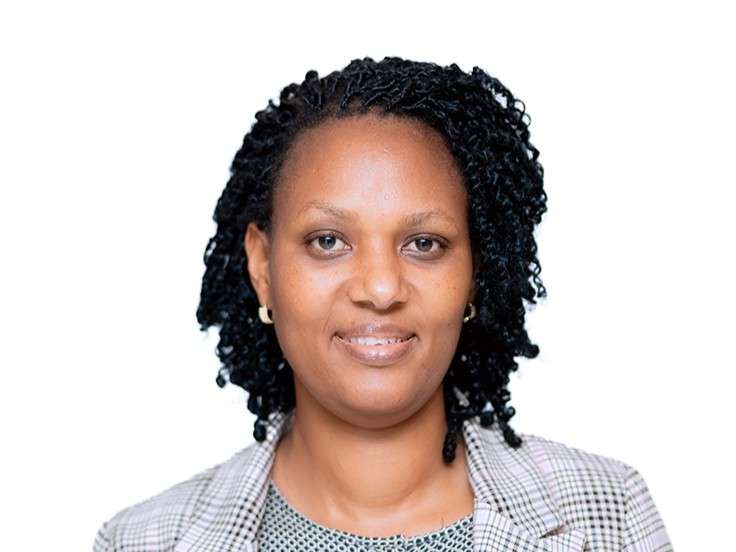
Beatrice believes that the journey of human resources has been one of profound transformation. Once defined by mountains of paperwork, the function has matured into the heart of business strategy. Today, she says, HR is about cultivating a strong organisational culture, supporting high performance and steering teams through constant change with confidence and agility.
Beatrice Uwera, HR head at Tres Infrastructure, starts her day not with boardroom meetings but with the laughter of her four children. She explains how her love for guiding, mentoring and coaching others at home naturally shaped her approach to human resources, where she now leads with a people-centred philosophy across a growing organisation.
Her journey in HR has been defined by curiosity, resilience and an unshakable belief in the potential of people. With over a decade of experience across various industries, she has witnessed firsthand how the profession has changed.
“HR has grown beyond handling personnel issues and the company administration process,” she says. “It’s now about understanding people, data and business in equal measure. You must know where the organisation is going so you can align its people strategy with that vision.”
This evolution, she explains, has demanded new capabilities. Modern HR professionals are now expected to blend emotional intelligence with analytical insight, balancing empathy with evidence-based decision-making.
“We are no longer just problem solvers, we are strategic partners. Our role is to anticipate what’s coming, whether it’s workforce shifts, new technology, or changes in employee expectations,” she notes.
New capabilities
At Tres Infrastructure, Beatrice’s role embodies that balance. Beyond managing administrative functions, she drives initiatives that nurture talent, strengthen culture and promote engagement. Her department acts as a bridge between leadership and employees, ensuring that business goals translate into human-centred policies.
“Employees today want more than job security. They want meaning, flexibility and growth. You can’t manage this generation with old systems. You have to listen, adapt and evolve with them,” Beatrice maintains.
But with evolution comes challenges. The biggest, she says, is keeping pace with the rapid changes in workplace dynamics. As automation, digitalisation and evolving generational expectations reshape the workplace, HR leaders must continually rethink how they attract, develop and retain talent.
“Technology has simplified many HR processes, but it has also introduced new expectations. Employees expect seamless systems and instant responses. You can’t rely on manual processes anymore, efficiency is part of the employee experience,” she explains.
Another growing challenge is maintaining employee engagement in hybrid and fast-changing work environments.
“People are more connected digitally but can feel isolated emotionally. HR must create spaces for genuine connection and wellbeing, even when teams are dispersed,” she says.
Evolving workplaces
Beatrice believes that the pandemic accelerated this transformation, forcing HR departments to rethink flexibility, mental health and performance management. What began as a crisis response has now become the new normal.
“We learned that empathy and adaptability are not soft skills, they are survival tools,” she notes.
Her leadership philosophy reflects that mindset. At Tres Infrastructure, Beatrice promotes open dialogue, encourages mentorship and ensures every employee feels seen.
“When people come to HR, they come with their challenges, hopes and fears. You must treat each case with respect. HR is about building trust, not just enforcing rules” Beatrice asserts.
That trust, she notes, is vital in a world where employees value transparency as much as compensation.
“If people believe you care about their wellbeing and growth, they’ll go the extra mile,” she emphasises.
Developing leaders
Beyond operational responsibilities, Beatrice is passionate about developing future HR leaders who are agile and forward-thinking. She mentors young professionals, reminding them that HR is both a people and a business discipline.
“You must be curious and strategic,” she observes. “Understand finance, understand operations; because people's decisions are business decisions.”
Her view on the evolution of HR is clear: the profession’s influence will only continue to grow as organisations recognise that their most valuable asset is human capital. Yet, Beatrice cautions, the field must continue adapting.
“We can’t stay comfortable with what worked before,” she points out. “Every few years, new challenges emerge, from remote work to AI-driven performance tools and HR has to respond without losing its human touch.”
Beatrice sees three priorities defining the next phase of HR: data-driven decision-making, employee wellbeing and inclusive leadership.
“Analytics will help us understand patterns, wellbeing will sustain performance and inclusion will build stronger cultures. Those three pillars will define the HR of the future,” she maintains.
People first
Despite the complexities, Beatrice remains optimistic. She sees every challenge as an opportunity for reinvention for HR to demonstrate its value not just as a department, but as the heart of organisational transformation.
“The role of HR is evolving faster than ever, but the foundation remains the same: people. If you focus on people, the rest will follow,” she stresses.
For Beatrice, the measure of success is not just in improved metrics or retention rates, but in seeing employees thrive personally and professionally. She reminds HR professionals that, at its core, the profession is about humanity, understanding it, empowering it and building organisations that rise with their people.
“When someone tells me they’ve grown because of a chance they got here, that’s the real reward. Infrastructure builds nations, but it is people who build infrastructure. When you invest in them, you invest in the future,” she reflects.