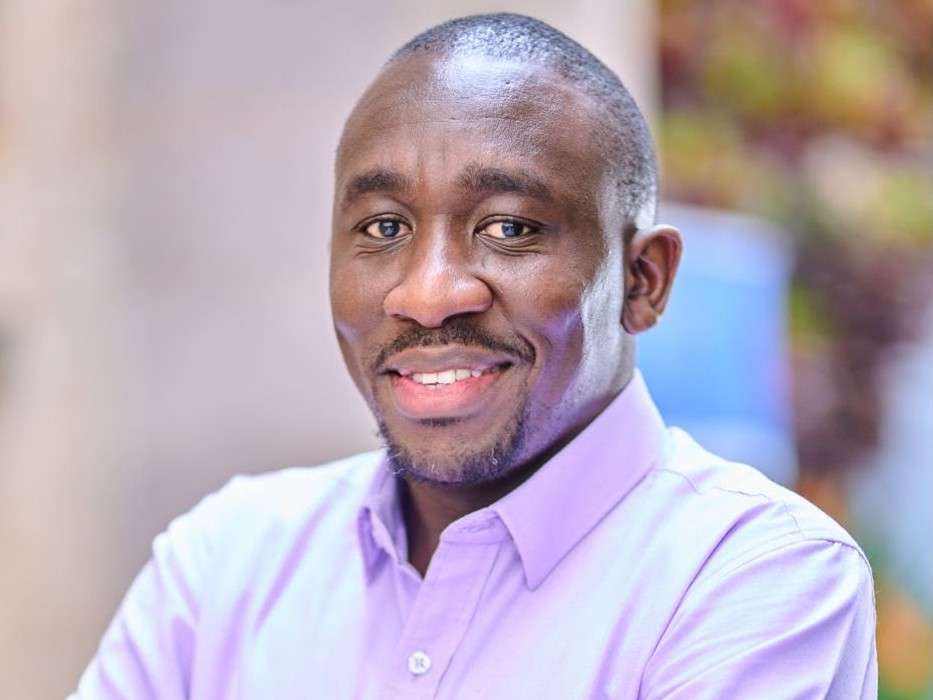
Martin Githaiga, head of people at Turaco, believes HR should help build a company rather than simply administer one. After years of building people functions in fast-growing companies, he has learned that the real work is understanding what an organisation wants to become and creating the people, culture and structures to get it ther
Martin Githaiga has spent close to five years building Turaco, the microinsurance company where he serves as head of people. Along the way, he has become an unlikely authority on a very current problem, how to get a workforce comfortable handing its daily tasks over to artificial intelligence, without either fearing it or trusting it blindly.
Martin's spent his first two years in management consulting, working towards a career in people advisory, until a client made him an offer that changed direction entirely.
“The pitch they gave me was, ' Hey, we are building something new. The startup ecosystem in Nairobi was probably non-existent at this point, so changing a path was quite the risk. But I was excited at the opportunity to do something different, and so I joined them,” he recalls of the approach from Jumia, then an early Nairobi startup.
Building from scratch
He watched the business grow from taking orders out of a small office in Westlands to running its own warehouse and logistics hub within two years, work he credits with teaching him how to build hiring and culture inside a fast-moving organisation.
“From there, a former colleague pointed me towards a fintech startup called Branch, which was looking for people with exactly the background I now had. They wanted to get some people who have some startup background, again, very few people back then, but it became very clear that this was a skill that was needed,” he says.
He joined a team sharing a single table in a co-working space and spent four years building the people function as the company expanded into Kenya, Nigeria, India, Mexico and the US, growing from around eight people to roughly 150 by the time he left.
A two-year stint at a firm serving the International Development space followed, where the task was less about scale and more about building the People team’s credibility and strategic importance.
“I designed career paths, job grades, and salary structures that took away the heavy lifting from managers on figuring out team progression. One of my colleagues came to me and said, they now have a clear understanding of how to work towards a promotion. It’s right there on paper, the things I need to work on to unlock the next level. Someone who was concerned about never growing now could see a path,” he says.
Making HR strategic
Four years ago, Martin returned to the startup ecosystem to help build Turaco, drawn by an ambition he describes in blunt terms.
“This was the first time someone was doing micro insurance in a big way. Working with underwriters or insurers, you realise that they're not incentivised to be better, to provide insurance to the mass market, they already have a target market that is willing to pay, so they're not incentivised to provide insurance to everyone else. We're not going to insure a billion people with traditional insurance,” Martin says.
Turaco now underwrites its own policies in Uganda, Kenya and Nigeria, operates as an intermediary on its way to underwriting in Ghana, Zambia and Tanzania, and has expanded into Pakistan, his first attempt at building outside Africa.
Martin describes his approach to HR as something he has had to argue for, not something handed to him.
“I've had to fight for the people function to be seen as key to getting the business right from day one. Don't just see it as administering payroll, or leave, or help you with recruiting, It's that and more. As head of people, for instance, I'm going to sit with you, the founder or executive, and figure out how we build this business,” he says.