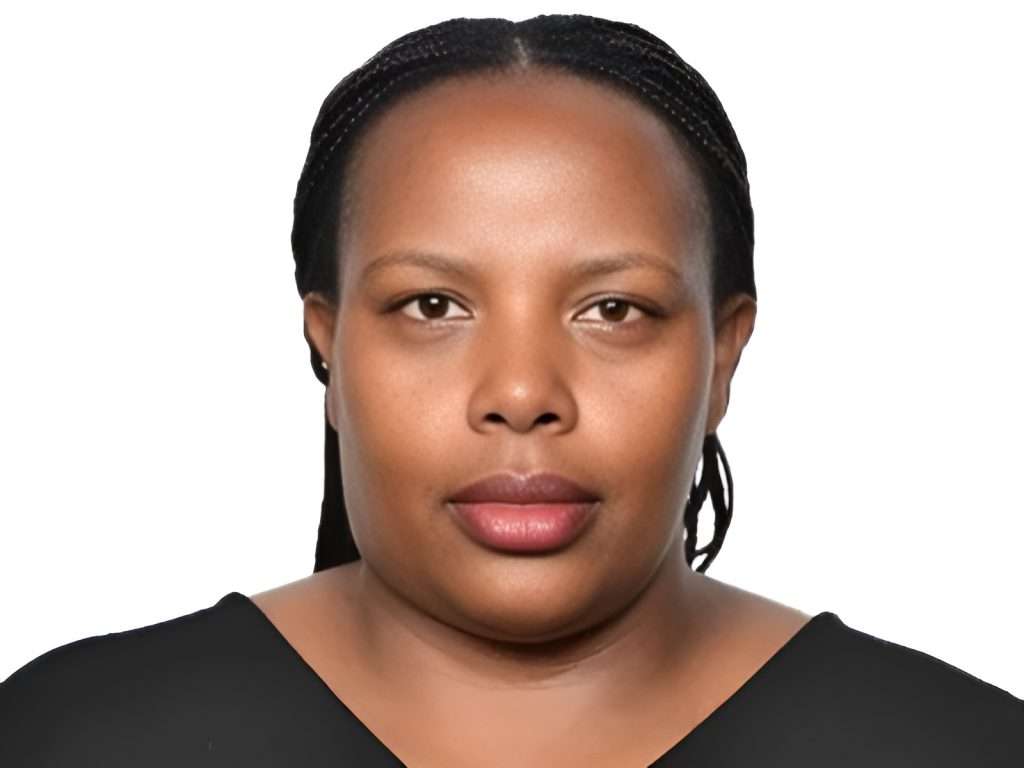
Claire Kaligirwa has built her HR career around a simple but powerful belief, that organisations are made up of people, and people deserve to be led with the same sense of dignity, empathy and responsibility that we bring to our families.
After more than two decades across banking, social enterprise and renewable energy, Claire Kaligirwa, head of HR and administration at ENGIE Energy Access (Africa), Rwanda, reflects on how organisations can retain employees with limited resources, handle job losses with care, use technology while maintaining personal connections, and create supportive workplaces.
For Claire, restructuring is a human experience that affects not only those leaving an organisation, but also those who remain.
“If I have been working with you for ten years, tomorrow I'm informed to go, it's like a part which will go. At work, that is where we spend most of the time. It's not at home. At home we create quality time, but at work it's the entire life,” she says.
This perspective reflects a leadership philosophy that has developed throughout Claire's career. She sees the workplace as a community in which relationships, trust and dignity matter alongside performance and business results.
From finance to human resources
At 24, Claire joined Banque Populaire du Rwanda as a customer service representative, later moving into an accountant role then branch administrative assistant. Her transition into HR was driven by an instinct to advocate for employees and help management understand their concerns.
“It was there, watching colleagues struggle to be heard by management, that I found the pull towards HR. Every time I found myself advocating for someone, defending someone who's not even in my position. That is how I knew I belonged in HR,” she recalls.
She subsequently advocated for HR opportunities to be opened to internal candidates. When a position became available in 2010, she applied, was selected and deliberately invested in developing the capabilities required for her new career path, including pursuing further studies in administration management.
She progressed to head of HR in 2010 to date specifically in multinational organisations. Her career journey illustrates a broader principle she continues to apply today: career growth is not always linear, and HR leaders must be willing to continuously learn, adapt and reinvent themselves.
She says the most difficult moments in HR often come when business realities require organisations to reduce their workforce. For her, the responsibility is to balance business sustainability with human dignity.
She believes communication should begin well before the final conversation.
“You make sure that you communicate enough to make sure that no one is surprised and everyone knows the reason why X and Y will depart,” she says.
She explains that restructuring means going beyond simply meeting legal requirements. Where possible, Claire advocates for measures that recognise the personal consequences of redundancy, including considering continued medical coverage and ensuring that employees receive all benefits and entitlements due to them.
“The responsibility does not end with those leaving. Employees who remain can experience uncertainty, anxiety and survivor's guilt, and I believe these emotions must be addressed deliberately. We use a therapist to hear, and we increase the moment of gathering, whether during the process or after the process. We allow people who want to cry to cry,” she adds.
Her approach is therefore built around three principles, transparency, dignity and empathy.
“When you have treated people with respect and built trust with them, even difficult conversations can be handled differently. For HR leaders, this is an important reminder that organisational culture is tested most visibly when circumstances become difficult. Trust cannot be created at the point of crisis, it has to be built consistently over time,” Claire emphasises.
Efficiency, not replacement
Claire has embraced artificial intelligence as a tool within HR and administration. She says that routine reporting, analytics, forecasting, and the preparation of standard communications can increasingly be supported by technology.
“For so many reports, we don't work with traditional reports. We use AI when we do our analytics, part of our recruitment process, and even when we are doing our end-of-month reports, in terms of what we have paid, what we need to increase, or the projection, we use AI,” she says.
Her view of AI is pragmatic rather than fearful.
“I see AI as an efficient tool, it’s not a tool to replace any one, it’s here to strengthen us . It helps me manage my time better and improve efficiency. For me, it’s about becoming more effective, not about replacing people.”
Claire says the discussion around AI should move beyond whether it will replace jobs and focus instead on how organisations can use the technology responsibly. She says AI can be used to reduce repetitive work, support decision-making, and give employees more time for higher-value activities.
Her approach to managing younger employees reflects another area where traditional management models are evolving. With younger employees entering the workplace with different expectations around flexibility, autonomy and benefits, Claire believes managers need to focus increasingly on outcomes rather than rigid processes.
“If he says he’ll come at ten, as long as he gets his work done and delivers, I’m comfortable with that. This does not mean lowering standards. Rather, it means being clear about expectations while allowing employees greater flexibility in how they achieve them,” she says.
She also recognises that employee needs are changing.
“They don’t necessarily need a house or medical insurance, for example. Maybe what they need is a car loan or a Friday off,” she says. “I try to see how I can accommodate those needs without breaching company policy and, for sure, it works.”
Claire says HR leaders need to understand what employees value at different stages of their lives and careers, rather than focusing only on providing additional benefits.
One of Claire’s reflections is on the wellbeing of HR leaders themselves. In her view, HR professionals can become focused on supporting others while neglecting their own wellbeing. She also points to the demands of leadership roles, including responsibilities to organisations, employees, families and communities, and the importance of leaders taking responsibility for their own health and wellbeing.
She believes this is particularly relevant for women in leadership, who may find themselves simultaneously managing demanding careers and expectations from their wider communities.
Her message is broader than simply encouraging self-care. It is about recognising that personal wellbeing is part of sustainable leadership.
“Make sure that they devote themselves, to their health, their families, their career, because it is possible,” she says. “When you count your children, when you count your siblings, when you count your career, be part of the counting.”