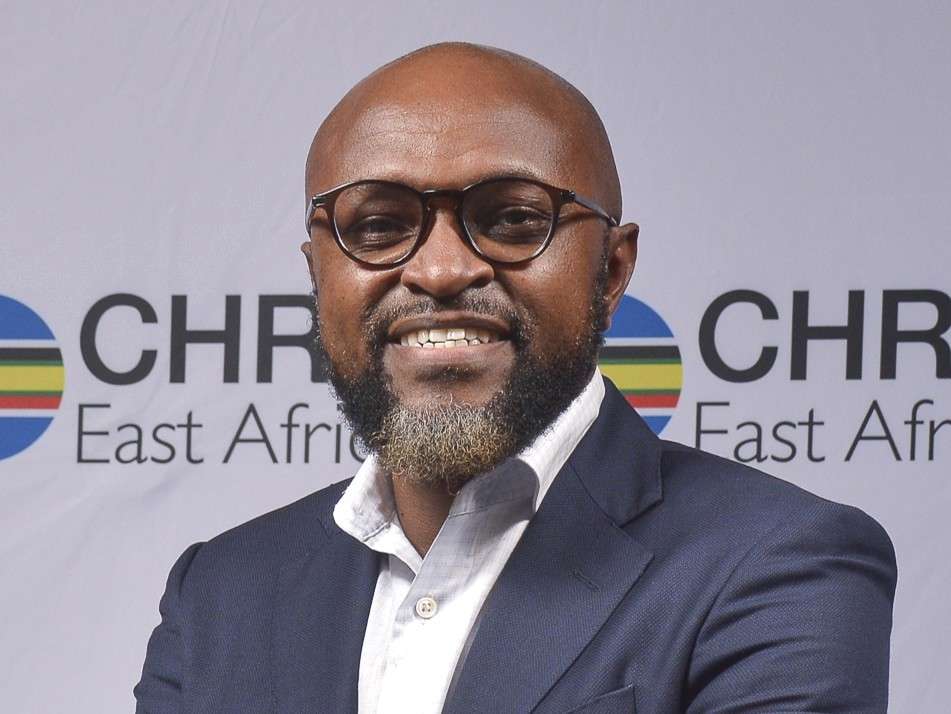
Ozem Muriuki’s HR career has given him a broad perspective on what it takes to build organisations and develop their people.
Head of HR & organisational development at Prudential Kenya, Ozem Muriuki reflects on the experiences that have shaped his leadership, including developing talent and future leaders, reshaping the HR function, redesigning organisations and using technology to improve how people work.
Please take us through your career journey and how it led you to your current role as head of human resources and organisational development at Prudential Kenya.
My journey began in industrial safety and learning facilitation in Logistics where I designed training programmes and coordinated workplace wellness initiatives. That foundation in practical capability building took me into Insurance where I was responsible for training commercial teams. There I deepened my expertise in talent management, performance systems, compensation and the early introduction of HR information systems.
I progressed into HR business partnering within commercial and later led the shared services across the region. This involved delivering operational excellence around the annual people cycle across performance, talent, succession, learning, organisation design and change. A period of independent consulting followed which then opened opportunities into the humanitarian world where I was responsible for supporting multi-region disaster response and community-resilience operations, implementing people processes under real constraints, and advancing talent mobility across a global movement of Red Cross/Red Crescent societies.
The calling back to financial services was loud and I picked up the head role for a regional underwriter, where I shaped the talent development vision, built leadership academies, oversaw the full HR spectrum and advised the executive team and the board, shaping talent frameworks and building leadership capability at scale.
That trajectory prepared me for the current opportunity at Prudential. Here I integrate strategy, people and culture. As Dave Ulrich has long argued, HR creates value only when it delivers results that augments the organisation to win in the marketplace. That is the standard I hold myself to every day.
You have worked in consulting, humanitarian organisations, insurance and now financial services. Looking back, what experiences have had the biggest impact on your growth as an HR leader?
Three experiences stand out.
First, leading HR shared services and the full people cycle at Old Mutual taught me the discipline of delivering consistent, high-quality service at scale while driving efficiencies through organisation design and process excellence.
Second, my time at Kenya Red Cross immersed me in operating in a mission-driven environment with constrained resources forces prioritisation, stakeholder mastery and a deeper understanding of how inclusive practices drive performance. My MBA research on workforce diversity management at the Kenya Red Cross further reinforced the link between inclusive practices and organisational performance.
Third, the consulting period and subsequent head of HR roles at GA Insurance and now Prudential sharpened commercial judgment. Advising CEOs and boards requires the ability to translate people decisions into enterprise outcomes without losing the human dimension. Framing HR as storyteller, strategy interpreter and strategic facilitator has proven enduringly useful.
Growth, I have found, comes less from titles and more from successive opportunities to operate at the intersection of people, performance and purpose. Collectively these experiences moved me from functional expertise to enterprise-level people leadership.
Your career has involved leading change, organisation design and HR transformation. What has been the most rewarding project you have worked on, and why does it stand out?
Building robust talent strategies and leadership pipelines in genuine partnership with line managers remains among the most rewarding work. When career pathing takes root, learning becomes more targeted, internal mobility rises and the organisation’s dependence on external hiring declines, that is lasting value.
Equally significant have been the technology-enabled transformations: moving organisations onto stronger HR systems, pairing them with clear service standards, and watching both efficiency and employee experience improve. Seeing mundane administrative work reduce, managers better equipped, and a clearer leadership pipeline emerge delivers lasting organisational value far beyond any single initiative.
These initiatives stand out because they combine structure, systems and behaviour. The real test is whether the change endures after the project team disperses. When managers own the new ways of working and employees experience genuine improvement, the work has succeeded.
You have been involved in introducing HR technology, reviewing organisation structures and leading change programmes. How has the HR function changed since you started your career?
Early in my career, HR was still predominantly administrative, processing transactions, ensuring compliance, delivering standard training and reactive employee relations.
Technology was limited, data was sparse, and the function was often viewed primarily as a support service rather than shaper of competitive advantage. Today HR is expected to be a strategic partner that anticipates workforce needs, leverages analytics, designs organisations for agility, and embeds continuous change capability.
We introduce integrated HRMIS platforms that free capacity for higher-value work, use metrics to drive decisions on talent and engagement, and co-create leadership and capability agendas with the business. The shift from process owner to trusted adviser who shapes culture, succession and organisational effectiveness has been profound and essential in a fast-evolving sector such as financial services. That evolution demands both technical excellence and the judgment to sit credibly at the leadership table.