
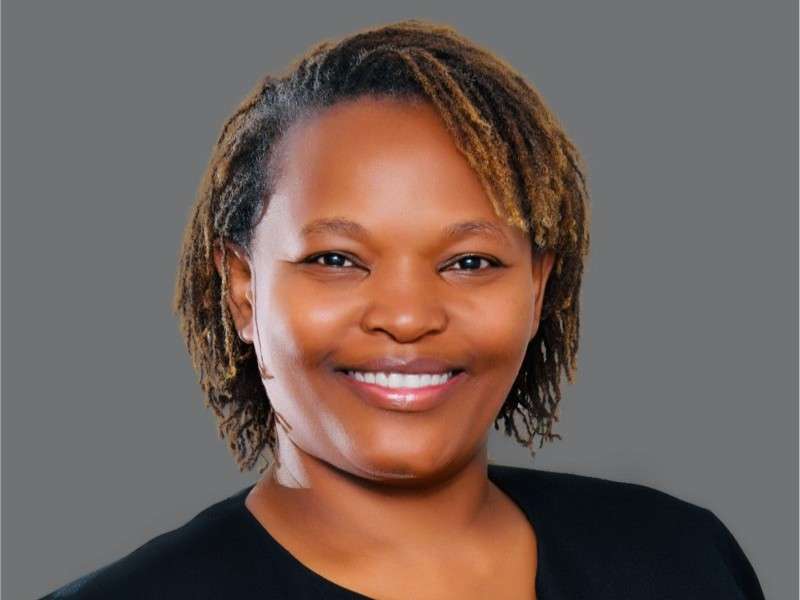
Milkah Wamae, head of HR at GTBank Kenya, believes that human connection is the foundation of effective leadership. From sharing street food with colleagues to forming hiking clubs, she actively fosters trust, engagement and collaboration across generations.
Milkah Wamae was once standing at their GTBank Kenya reception when she overheard a group of young colleagues ordering food. Someone mentioned a smocha, a type of Kenyan street food she had heard about but never tried, a chapati wrapped around a smokies, sausage with diced salsa, , chillies and mayonnaise. She told them she had never had one and they would not not let that stand.
“So, they ordered for me and that's the opportunity I got to enjoy this delicious thing with my colleagues. I didn't have to put my HR hat down. I did that still at my role and it was such a good moment for that human connection,” she recalls.
Days later, the same colleagues found her and asked whether she had enjoyed it and if they could be doing that every Friday. A small exchange over street food had become a thread, one she has pulled on deliberately ever since, because she believes the quality of everything else she does as an HR leader depends on exactly this kind of thread being there.
Finding her calling
Before Milkah became the head of HR at GTBank Kenya, she spent three years at Kapa Oil Refineries, an FMCG giant managing over 2,000 members of staff across multiple factories. She had also worked as a management consultant at PwC Kenya, handling assignments across East Africa. And prior to any of that, she spent seven years at Co-operative Bank in operations, learning the daily texture of work from the other side of the function she would eventually lead.
She studied education at university and started teaching during her practicum. After graduating, she became an admin assistant, and somewhere in the space between one thing and the next, she and a friend decided to go back to school.
“It's not that I was interested in HR,” she says, “but I really wanted a course that has something to do with interacting with people other than students. And I started doing HR and I loved it. I was really intrigued when we were talking about employee wellness, compensation and benefits. My course was so natural.”
She completed her higher diploma and then spent seven years at Co-operative Bank doing operations. She managed tellers, trained branch staff as a branch onsite trainer, and applied everything she had learned without having the title that described it. By her sixth or seventh year she could no longer ignore the pull.
“I said to myself, I know I still want to do HR. So, I left the bank and I joined the PwC team and that is when everything just blew. I thought,, this is what I've been missing for the last seven years. I could remember why I took the course. The puzzle had fully been completed,” she recalls.
At PwC, she ran assignments across the region, working on people processes and culture transformation assignments inside client organisations. One project that stands out was a job evaluation and salary structure review assignment for a national commission, a project that touched the entire teaching service in Kenya and whose results she says she can still see today. When she eventually left consulting for industry, she joined Kapa Oil Refineries as HR manager, overseeing more than 2,000 staff across factories from senior executives to general workers. Then came GTBank Kenya, where she has been for almost four years.
“I look at the coin from the other side,” she says. “When a teller comes to me, I can feel them. I know the pain and I know how to approach them from a branch perspective. So, I'm glad I also did those seven years in non-HR roles because it shaped me to be who I am.”
Beyond the job title
Milkah highlights the power of simple human connection at work, a line she says stands out to many who know her professionally because it reflects something she genuinely practices. Her view is that the separation people draw between their work self and their human self is artificial and costly.
“The moment you make every interaction transactional, every communication formal, every encounter bounded by role and hierarchy, you lose access to the texture of who your people actually are,” she notes.
And that texture, she argues, is where the real information lives.
“Work is an extension of you. You are a human. I should also be able to respect who you are when you're not here. I don't like finding a line. Any time I feel like my work is forcing me to be boxed into that very formal person, it stops being exciting. You also miss a lot of people. You miss some small nuances you would want to know about somebody when they are out there, when they are themselves,” she says.
The hiking club at GTBank came from this instinct. After discovering through casual conversations that several colleagues shared an interest in nature and outdoor trails, Milkah brought them together to form a club that now has two completed hikes to its name.
“When you're out there, you learn to rely on each other. On one hike, I was the last person to make it up, and people encouraged me and helped me get there. When you finally reach the summit, it feels like a shared achievement, everyone is happy because everyone made it. Those experiences create real human connections. You get to know what people care about and what they love, and because of that, we've been able to make people feel more valued at work,” she says.
This offers a glimpse into how Milkah interacts with colleagues outside the workplace.
The same philosophy shapes how she approaches the generation that makes up a significant part of GTBank Kenya's workforce - Gen Z. She has heard all the labels, difficult or entitled, demanding or too bold, but she does not find them accurate or useful.
Connecting generations
“I love working with them because there’s so much to learn from the way they think. They ask questions, seek clarification and want to understand the bigger picture. They want to know where the organisation is headed and why certain decisions are being made. The days of leaders expecting people to follow instructions without explanations are gone. Today, employees want to understand how their contribution fits into the broader goal and the role they play in helping the organisation get there,” she says.
When the bank was developing its current strategy, management involved the younger employees in the process from the start.
“You don’t want to hand people a finished document and tell them to implement it. You want to involve them while it’s being developed so they understand it, own it and talk about it with their colleagues. That way, when the time comes to implement it, they’re already invested in its success,” Milkah says.
Her preparation was also personal, as she took courses on LinkedIn to better understand what motivates generation Z, making a deliberate effort to see the workplace through their eyes rather than expecting them to adapt to her perspective.
“People are quick to label them, but often it is because they are unwilling to see the other side of the coin,” she says.
When the working day ends, Milkah returns to the things she has always enjoyed. An outdoor enthusiast, she spends her free time exploring nature trails, taking care of her plants. She has also participated in the Nairobi City Marathon and the Standard Chartered Marathon.
“I tried pottery once. From a distance it looked straightforward, the spinning, the shaping, the slow emergence of form from clay, but it wasn’t. It takes a lot of patience. It looks easy when you see someone at the wheel, but it really isn’t,” she says.
She made a small bowl that now sits at home holding pens. She is not sure she will go back to the pottery wheel, but the curiosity that took her there is something she says she also brings to her job.
“I was born with it. Even when I ask my mom, she says I was a very curious kid who just wanted to know how things work. Not technical things, but things like crocheting and knitting, what is this pattern. So that’s what I would call myself. A curious person,” she says.