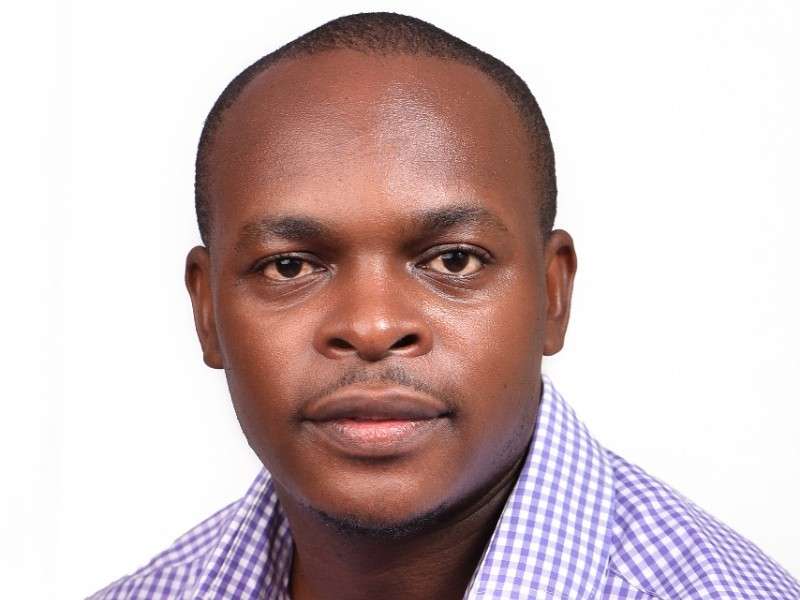
For Bernard Atonga, HR isn’t about people as a resource, it’s about people as people. With a career spanning factory floors, creative teams, public service and global NGOs, Bernard has learned that HR must adapt to culture, context and purpose.
In the world of work, where systems, structures and strategies often dominate boardroom conversations, Bernard Atonga has built his career around something more enduring, people. For him, HR has never been just a department or a checklist. It’s the heartbeat of any organisation - dynamic, contextual and deeply human.
“You can have the best systems, but without the right culture, you go nowhere,” he says.
Perspective
Bernard disputes the view that HR is a one-size-fits-all function. He notes that each setting has taught him that while HR may share a name everywhere, its essence shifts with context, culture and purpose.
“HR isn’t the same everywhere, because people aren’t,” he explains. “Every organisation has its own rhythm. You can’t force it. You have to listen until you find it.”
It’s this people-first, context-aware approach that has defined his leadership. HR, in Bernard’s view, means understanding people’s differences and adapting thoughtfully to support them. What shaped his understanding of HR was hands-on experience across manufacturing, publishing, government corridors, consulting firms and global NGOs, not classroom theory.
Bernard's journey began in finance. At the university, Bernard imagined a future in finance until an attachment in the HR department at Crown Paints in 2009 disrupted that certainty leading him to change his degree choice. He joined the company’s HR department as an intern, later becoming a full-time assistant, adding that the experience turned out to be more than paperwork; it offered a direct view into human behaviour.
“In manufacturing, HR is immediate,” he recalls. “You deal with real people and real issues, shift changes, union matters and safety concerns. It’s where you learn patience and empathy.”
Experience
When Bernard moved to Longhorn Publishers in 2011 as human resources & administration officer, he entered a world that couldn’t have been more different. Gone were the factory schedules and production targets. Here, creativity reigned and managing people meant managing ideas, inspiration and temperament.
“Publishing taught me flexibility,” he says. “You’re dealing with designers, editors, writers, people whose value lies in what they imagine. You can’t measure that with attendance sheets or output reports. You manage through trust and communication.”
It was at Longhorn that Bernard began to see HR as an art of adaptation. He says that what worked in manufacturing, strict structure and routine had no place in a creative environment. Instead, success depended on openness, collaboration and emotional intelligence.
“It’s in those differences that HR becomes interesting. You realise it’s not a formula. It’s fluid. It has to fit the people, not force them to fit it,” he says.
A move into the public sector added yet another dimension to his journey. Bernard joined a newly formed semi-autonomous government agency under the Ministry of Agriculture at a time of transformation as chief human resource & administration officer. He says 13 parastatals were being merged into one, and the task before him was monumental, with other HR professionals to unify policies, harmonise pay structures and most importantly, bring together people who had once worked in competing institutions.
“It was a masterclass in patience and diplomacy. We were building systems from scratch while trying to calm fears and build trust,” Bernard says.
Public service taught him a different pace and perspective that in government, HR is about regulation and accountability. Bernard adds that decisions here affect livelihoods across the country, so one must think long-term. It was also where he saw the power of consistency.
“You learn that sometimes the slow route is the only sustainable one, and also you can’t lead through position, you lead through integrity,” he adds. “People need to see fairness before they follow rules.”
Transformation
When Bernard joined KPMG East Africa in 2017 as head of human resource business advisors, he found himself in yet another world, one of precision, global standards and relentless performance. The firm’s culture was fast, data-driven and intellectually demanding.
“At KPMG, HR sits at the decision table. Our work went far beyond policies and procedures, we advised business leaders on strategy, succession, performance, employee engagement and experience,” Bernard notes.
He led the rollout of SuccessFactors, a global performance management system, and spearheaded culture transformation programmes. Managing graduate recruitment and leadership development exposed him to the complexity of generational diversity within professional services.
“The expectations of young professionals are very different. They want flexibility, visibility and purpose. Our job was to build systems that met those needs while keeping the firm’s high-performance culture intact,” he explains.
Bernard notes that when the pandemic hit, everything changed. The world of polished offices and long client meetings moved online almost overnight. His focus turned to maintaining connection and morale across remote teams.
“COVID taught us that leadership is about trust,” he explains. “You couldn’t lead by presence anymore. You had to lead by purpose.”
Purpose
Today, at the World-Wide Fund (WWF), Bernard’s role brings his career full circle from managing factory workers to now supporting environmentalists and scientists. As the head of people & culture and currently serving as acting head of business development and communications, Bernard finds himself at the intersection of purpose and people.
“After years in corporate HR, I wanted to be part of something that measures success by impact, not income. WWF allows me to see how people and purpose connect directly to global change,” he notes.
Leading HR in an international conservation organisation, he explains, requires more than technical expertise. It demands cultural awareness and empathy because they manage people from different backgrounds and beliefs.
“You must find common ground while respecting differences. Under my leadership, WWF-Kenya office is redefining its culture, creating fair systems for growth, promoting wellness and nurturing leadership pipelines for the next generation,” Bernard points out.
Throughout every stage of his career, Bernard says, one thing has never changed: his commitment to fairness, consistency and respect.
“I’ve led through transformation, uncertainty, even crisis but for me, success is simple,” he says. “If someone can look back and say, while I was there, I built a people system and culture that enabled the organisation to achieve its mission through engaged, capable and value-aligned people, then I know I’ve done my job,” he says.
“My goal is to always create an environment where people bring their best version to the office and subsequently give their best,” he concludes.