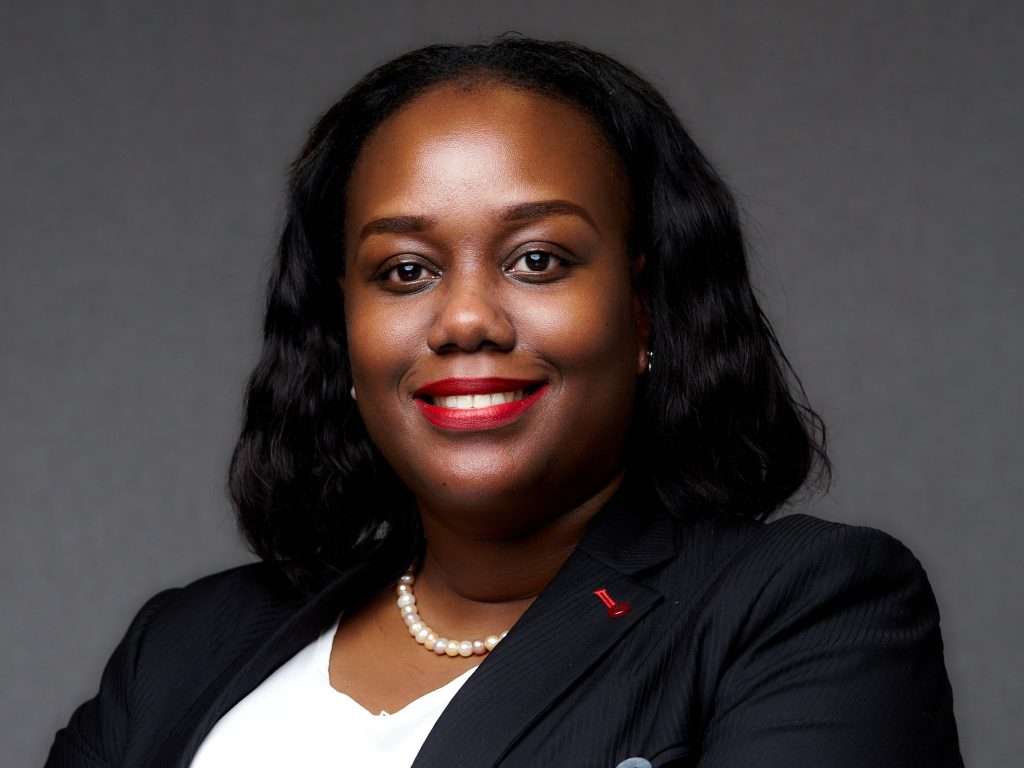
As AI continues to redefine the modern workplace, it is increasingly becoming a powerful tool for enhancing decision-making, streamlining operations and generating deeper insights into workforce trends. But for Erica W. Mboya, head of HR at I&M Bank Tanzania, technology is only part of the story.
The real test is in striking the right balance and embracing the efficiencies of automation while safeguarding the human touch that remains central to the profession. She is optimistic about the value AI will bring to her profession but equally realistic about its limitations.
Erica believes that technology is a tool, not a replacement for the people-centred work that defines her role.
“AI is an incredible enabler, it helps simplify routine work and processes, things like minute writing, projections or translating complex ideas into simple, digestible and actionable insights or messages. It also helps from a data/information gathering perspective,” she explains.
Marrying data with human insight
Erica values how AI enhances efficiency and provides data-driven insights, but she remains cautious about over-reliance, noting that the human touch can easily be lost in the process.
“All of a sudden, it feels like the world is starting to sound the same, almost scripted. That’s where AI falls short. It lacks that in-built, human touch and as HR leaders, we still need to apply our own thinking. You can’t automate everything, because people are never just data points,” she points out.
At I&M Bank (T), AI has been instrumental in enabling the HR team to pinpoint and respond to workforce trends with greater precision. Erica says AI has helped with fine tuning process flows, engagement initiatives, running workforce analytics such as attrition by job grade or experience level, and pinpoint where intervention is needed.
“AI is very factual and data-driven, but people are complex. You can look at a trend and still need to ask, what’s happening on the ground or what the actual issue is, to understand what’s really going on, “she says.
For Erica, the future lies in blending the two, the balance between tech and human touch and insight, while also applying empathy and judgment to interpret what the numbers miss.
A career forged across banking giants
Erica’s journey into HR began in 2012 at Stanbic Bank Tanzania, shortly after she completed university.
“I started as a HR officer and within a year, I was appointed a junior human capital business partner,” she recalls. “I stayed at Stanbic for nearly five years before moving to NMB Bank in 2016 as a talent acquisition specialist, later returning to a business partnering role, an area that aligned with my strengths.”
At NMB Bank, Erica rose from a talent acquisition specialist to an HR business partner. In her early role, she led end-to-end hiring strategies, strengthened talent pipelines and elevated the bank’s employer brand to attract top candidates. Later, as an HR business partner, she worked hand in hand with business leaders to align HR with organisational priorities, driving performance management, deepening engagement and building bench strength.
In 2020, she joined I&M Bank (T) as head of HR, where she has played a leading role in shaping the bank’s people and culture agenda; integrating talent management, organisational effectiveness and strategic execution to drive business performance and transformation.
“When I reflect on my journey, I’ve been privileged to work at an international bank, one of the largest local banks and now a regional bank with a strong footprint across five countries. That mix has shaped how I lead, adapt, and navigate different organisational cultures,” she notes.
Listening to the next generation
Working closely with younger generations, particularly Gen Z, has reshaped how Erica approaches HR leadership. She notes that this cohort is vocal, and value-driven, with a strong commitment to sustainability. Erica adds that Gen Z’s openness has been a catalyst for change at I&M Bank (T), prompting the introduction of various employee engagement initiatives aimed at fostering a more inclusive and responsive workplace culture.
“We introduced Coffee with the CEO, a monthly engagement forum that gives employees a relaxed, open space to share feedback directly with leadership,” Erica explains. “It’s a candid conversation where people talk about what they value, what they’d improve, and even how they’d lead differently to make I&M a better place to work and a bank our customers can trust.”
The bank also introduced regular TGIFs (Thank God It’s Friday) sessions, casual team building events designed to strengthen interpersonal connections across departments.
“These initiatives might look simple, but they create trust. People feel heard, valued and part of something bigger,” Erica explains.
Erica is also committed to employee wellbeing, particularly in today’s climate of rising stress and burnout. While traditional health benefits remain, she notes that the bank has broadened its support to include mental health services and wellness programmes, initiatives she believes directly enhance business performance.
“All our staff have access to gym facilities, and we provide counselling support to our employees,” she says.
Breaking silos, building networks
Erica believes the next frontier for Tanzania’s HR community lies in stronger collaboration and collective growth. While platforms such as the Association of Tanzanian Employers and the Tanzania Bankers’ Association provide valuable engagement, she sees room for a more structured and consistent forum, one that brings HR leaders together to share insights, co-create solutions and drive the evolution of the profession.
Today, most collaboration happens through informal networks, where HR leaders from various banks exchange information, and discuss best practices. Erica sees these organic connections as a powerful foundation.
“A few of us from different banks might catch up and share insights. But imagine the impact of a unified HR voice shaping policy, driving learning and elevating the profession to new heights,” she reflects.
Winning the war for talent
She finds the launch of CHRO East Africa both timely and necessary, noting that it offers a valuable platform for collaboration and shared learning among HR leaders across sectors and borders.
“It sounds quite interesting. I’m keen to see how it unfolds especially because HR hasn’t always had a structured platform to engage regionally,” Erica said.
One of the most pressing challenges Erica navigates in her current role is the shortage of skilled talent especially in revenue generating and highly specialised areas within Tanzania’s banking sector. This reality has pushed her and her team to rethink their talent strategy, placing stronger emphasis on developing young, homegrown talent while continuing to attract expertise from the external market.
“It’s about spotting potential early, investing in young graduates, and building bench strength from within,” she says. “AI helps us identify gaps, but it’s people who close them.”
“We’re doing a lot more to future-proof our teams.”