Mother's Day lands differently when you spend your week managing other people's wellbeing for a living. Human resources leaders from across East Africa have a message for mothers: you cannot pour from an empty cup and stopping to fill it is not a betrayal of anyone who depends on you.
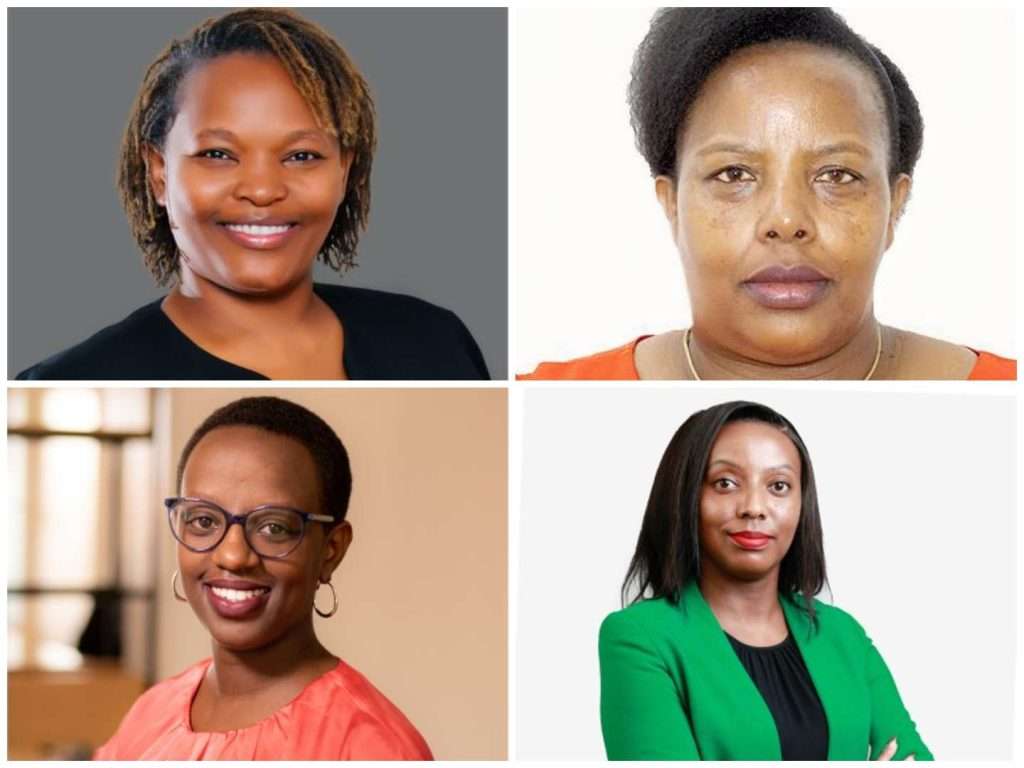
Lily Njagi, the head of human resources at Unilever, starts her advice from first principles. She is a mother, a wife, a church manager and Lily, and the order in which she lists those roles is highly deliberate. She tells her children directly when she needs a morning to sleep undisturbed, and while people often tell her it sounds harsh, she calls it wearing her oxygen mask.
“When it is time for me, over and above being a mother, there is a church manager, there is a mother, there is a wife and there is Lily,” she says. “And the first person to take care of is Lily, so put on your oxygen mask before you take care of anybody else. Then your best self can perform for your work, you can be in a stable, good relationship and you can be an incredible mother.”
Fill your cup
She also makes a distinction that working mothers rarely make out loud, noting that when she travels with her children, she calls it the children's holiday because she spends the entire time running after packed bags and shower schedules. Her own holiday only truly happens when they finally go back to school.
Wanja Kung'u, the head of human resources at AAR Hospital, frames the exact same idea differently. A doctor who speaks at her organisation introduces the concept of the 360-degree woman, asking not only what you give outwards but what you feed back into your own body, and the profound question stays with her.
“As much as you are going out there to help communities, are you doing those exercises and do you take time to debrief? Live as a 360-degree well woman. That is my message for the mothers out there,” she adds.
Claire Kaligirwa, the head of human resources and administration at Ignite Energy Access in Rwanda, remains clear-eyed about her own record of giving generously to siblings, friends, children and nieces while consistently putting herself last. Her daughter recently challenged her on this habit by transferring three months of spa sessions into her account and telling her to save the equivalent once they run out.
“When you count your children, when you count your siblings, when you count your career – be part of the counting. When I go shopping, I make sure I will buy at least one item for myself, and if I am buying a gift, I will also gift myself. This is something we need to learn as mothers,” she says
Redefining motherhood
Elodie Queen Cyuzuzo is the human resources manager at Ampersand Energy in Rwanda, and she speaks directly for the mothers who show up sick and keep going because the alternative involves sending a partner to the shop who returns with entirely the wrong brand of paper towel.
“Being a working mother is world class. The rewards may not come as the words that you are a perfect mother, but they will come. Let us appreciate the ability that we have to do it, and reward will come in due time,” she says.
Milkah Wamae, the head of human resources at GTBank Kenya, addresses maternal guilt directly by arguing that social media makes it easier than ever to see another mother doing something you are not doing and falsely conclude you are failing. As a mother of one, she describes motherhood as a stewardship and an honour rather than a performance to be scored against other people's highlight reels.
“You are doing great, you are doing awesome, whether you are in business, at work, or a stay-at-home mum. Take time off and do not feel guilty for taking the time off to just connect with yourself. It is not a crime to watch Netflix as a mother, and even to buy yourself ice cream and not your child, buy yourself ice cream and eat it,” she says.
Dieudonne Jean D'Amour Ndayishimiye is the country human resources and organisational development manager at Plan International Rwanda, and he brings a crucial organisational dimension to the conversation. His message focuses on what workplaces actually owe mothers, which includes breastfeeding rooms, grooming rooms, hygiene provisions and a genuine pipeline that promotes women based on performance rather than in spite of their gender.
“We are considering women by supporting them to work comfortably, supporting them to have what is needed so that they can feel they are in a good working environment,” he says. “If women are good performers, we give them the chance of going up and occupying managerial positions.”