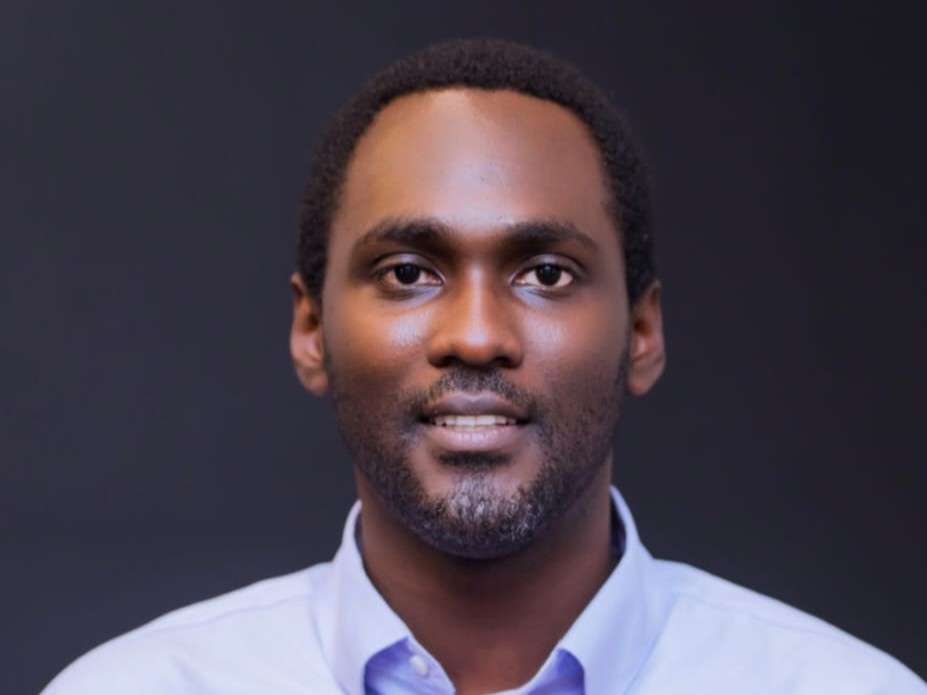
Having worked across banking, non-profit, telecommunications, education and energy, Robert Murengezi says no two organisations demand the same approach to HR. For him, career growth comes from embracing unfamiliar challenges, while great hiring begins with patience and process.
Robert Murengezi is the kind of person who finds comfort in a good conversation over lunch, thinks carefully before he speaks and has spent the better part of his career moving deliberately towards discomfort.
He is currently the HR and administration manager at Oryx Energies in Rwanda, a role he arrived at through a recruiter, a LinkedIn message and what turned out to be one of the most thorough hiring processes. He says that story with a kind of reflective affection, because the rigour of that process confirmed something he had already come to believe across more than a decade of working in HR: that the quality of any organisation's people decisions is a direct reflection of how seriously it takes the act of hiring.
That conviction was formed much earlier, in a bank, during a period of professional restlessness that Robert now describes as one of the most instructive passages of his career, because he chose to pay attention to what it was telling him.
“I always feel like my story ending up where I am today in HR is quite something I'd like to share with different people, because we have people growing up trying to figure out what career they would like to follow.I was handling payroll and thinking about the growth path I saw for myself. It all starts from somewhere. We all start from somewhere,” he says.
Finding his path
Robert began his working life at Kenya Commercial Bank (KCB) Rwanda, handling payroll. He was good at it, and he stayed with it for four years, long enough to understand the function thoroughly and long enough to understand that understanding it thoroughly was not going to be enough.
“The role was quite contained, and I could already see the ceiling. Payroll occupied an awkward position in financial organisations. It was really an HR function in terms of what we did, but because it sat under finance, it was difficult to transition into the wider HR profession,” he says.
What distinguished Robert at that point was not that he felt the friction, most people in similar positions feel it, but that he refused to absorb it passively. He began talking to colleagues. An honest look at where the people above him had come from and what had shaped their careers followed. He then sought out the then head of HR at the bank and had a direct conversation about what he wanted and whether it was possible.
“She didn't create an opportunity for me, but she encouraged me to take one if it came. That simple piece of advice has stayed with me ever since. It taught me how powerful the right words can be at the right time, and it's the same kind of encouragement I now try to give people coming up behind me,” he says.
He enrolled in a Master's in human resource management. Shortly after, a role came through at World Vision International for an HR business partner position. The timing was the kind of alignment that tends to find people who have already done the work of preparing for it.
Learning across sectors
“I usually say that move determined my HR journey. It was at World Vision International that I got the opportunity to become an HR business partner, while at the same time pursuing my Master's in human resource management. That was the point when I fully entered the HR profession. Personal and career development are core functions of HR, and that's why I spend time mentoring others. We talk a lot in HR about helping people grow, but the real question is: what are we actually doing to support their development?” he says.
Robert notes that World Vision gave something that a single-sector career rarely provides early enough: a front-row view of what HR practice looks like when it is genuinely embedded in an organisation's purpose rather than sitting adjacent to it. The work required him to think about people not as headcount but as the primary mechanism through which an institution delivers its mission. He built networks, knowledge and a frame for the function that has stayed with him through every role since. And from that foundation, the sectors began to multiply.
The career that followed World Vision has taken Robert through non-profit, telecommunications, education, energy and other environments besides. His consistent observation across all of them is that the same HR title in different industries requires genuinely different thinking.
“Every organisation is different. The workforce, the culture and the challenges that land on your desk are different, and the solutions that worked in one place don't necessarily work in another. Looking back, moving across different sectors wasn't a sign of restlessness, it was probably the best investment I could have made in building my experience and depth as an HR professional,” he says.
Hiring with purpose
His point for HR leaders who are weighing the security of staying within a familiar sector against the uncertainty of moving is a measured one. Staying put builds expertise in a specific context. Moving builds the capacity to distinguish between what is universal about the function and what is particular to an industry, and that distinction is only visible from the outside. A HR leader who has only ever worked in one sector carries assumptions about how things should be done that have never been tested by exposure to a genuinely different way of working.
“Different environments, for instance, I have worked in about six sectors, and in all these sectors I have a different take-home, I have a different lesson. HR is standard, we are doing this, but again in every single industry I have not solved the same problem. I have always found a different challenge. This is what usually inspires me to want to take on different opportunities of growth. My vision is to continue leading HR, but with impact across different environments,” he says.
He says hiring wrong produces consequences that compound over time.
“The consequences of a wrong hire often surface later in performance issues or culture problems that are difficult to reverse. The time and effort invested in a thorough hiring process is far less costly than trying to fix a poor hiring decision afterwards. That's why we base our recruitment on merit and involve two or three assessors in the process, ensuring we remain objective and make the right decision,” he says.