
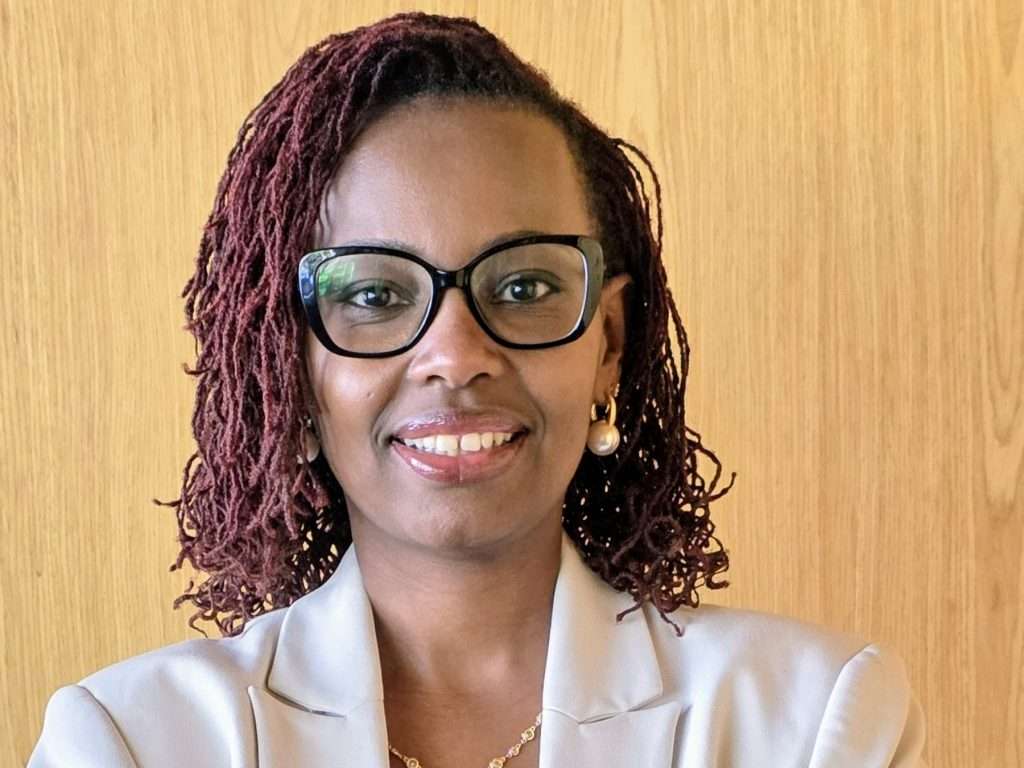
Rose Karugu, human resources, administration and information technology director at Ishara Towers Rwanda, has a physical board positioned directly behind her desk. It is a board that she has personally written on, and it remains highly visible every single morning when she sits down to begin her working day. It carries her strategic professional plans for the year 2026.
To anyone walking into Rose Karugu’s office, a physical board positioned directly behind her desk immediately stands out. It carries her strategic professional plans for 2026 and reflects a clear intention to make a meaningful impact. That instinct to identify a gap and step into it is what defines Rose, both in her professional life and beyond.
Today, she serves as the human resources, administration and information technology director at Ishara Towers Rwanda. Beyond her demanding corporate responsibilities, she is a devoted wife and a dedicated mother to a daughter who is at university, a teenage son and a set of twins
“Sometimes I feel it is overwhelming, however, I also see it as a big opportunity for me, Rose, to make a change and to be an instrument of building a new culture,” she says.
With the unwavering support of her husband, Rose skilfully balances her professional commitments and a fulfilling family life.
Building culture through leadership
Rose’s primary task is to build something entirely coherent from an organisation that has new ownership but carries years of deep institutional history. Alongside these immediate corporate goals, her personal objective is to significantly grow her coaching practice. Having been recently certified by CDI Africa as an executive leadership coach, she wants to actively use that specific skill both inside and outside her organisation, especially to support fellow women who are still building their career, although she is still working out exactly how that integration will look in practice.
“I initially began my career as a university student working in a receptionist role at a bank. I did not meticulously plan the career path that followed my initial entry into the corporate world. I joined the MD’s office for maternity cover and eventually stayed there. The chief executive officer at the bank noticed my potential and pulled me into an assistant role, where I performed so exceptionally well that leaving the position eventually became difficult” she recalls.
When she eventually decided to move on, joining Tigo Rwanda, a telecommunications company that was just entering the Rwandan market, she transitioned again into an assistant position. She later moved into commercial work within the same telecommunications company, and it was during a training role that she finally discovered what she had not been able to successfully name before, which was a profound interest in people and their development.
“I didn’t like human resources, just like any other staff,” she admits. “And then I joined the commercial department and I was doing training, I did that for one year and that is how my interest for human resources came in.”
She subsequently joined Crystal Ventures as a human resources officer and steadily climbed the corporate ladder over time, eventually reaching the senior position of group human resources manager. While making this steady ascent, she simultaneously pursued and completed a master of business administration degree specialising in human resources.
From there, she made a significant transition into the non-governmental organisation sector, taking a role at Save the Children Rwanda & Burundi. This specific transition demanded a major professional adjustment from her, as she had to learn to navigate the rapid humanitarian pace, the structure based entirely on specific projects, and the completely different logic regarding what the actual purpose of the work was meant to achieve.
“I am glad I went through it, as it expanded what I knew about doing human resources in different multi-cultural environments, and then I returned to the private sector at what was then IHS, now Ishara Towers, where I have spent 4years and today,” she notes.
Rose describes her strategic approach to the human resources function with a level of clarity that only comes from long and sustained practice in the field. At Ishara, Rose sees herself as both a strategic and operational HR leader. For her, this means truly understanding the core business so she can design and deliver HR initiatives that are relevant and impactful, while also enabling people to thrive.
“Understanding the business goes beyond theory; it involves being present on the ground, meeting those who maintain the network, listening to their realities, and proactively supporting their needs. If I do not go on the field to see exactly what they are doing and what their challenges are, I will not be able to support them and to be a good HR professional for them. A good human resources professional should also be able to understand what the business is doing in general, because human resources alone is not enough,” she explains.
Turning experience into advocacy
For Rose, this also means acting as a trusted business partner at all levels of the organisation, ensuring that HR adds value and creates a meaningful, positive impact.
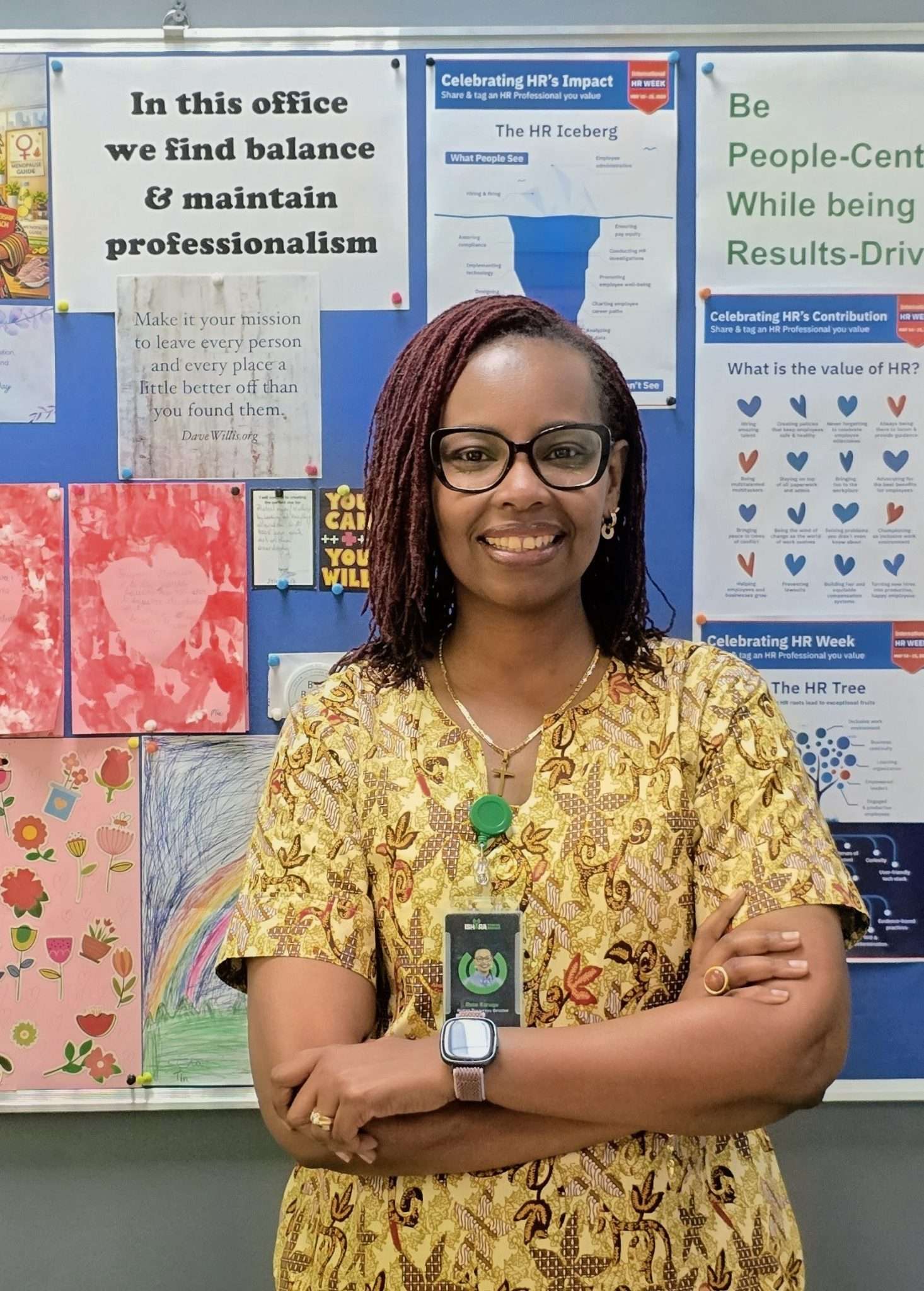
“At the same time, being an HR leader requires strong ownership of compliance and policy implementation, which comes with a high level of accountability, responsibility, and the need to lead by example, especially when it comes to shaping culture. I once read that we should strive to leave every place better than we found it. This is a principle I try to live by every day, and one I hope to fully achieve over time,” she adds.
When she reflects on her professional journey, she considers the entire arc of her career to be her ultimate highlight. Starting as a junior officer and ending up at the executive level, all without ever fully expecting it to happen, brings her immense pride.
“I would also like to highlight that starting my career from the ground up to where I am today allows me to deeply relate to those at the beginning of their journey, those facing uncertainties, challenges, or questions about how to grow, pivot, or build something of their own,” Rose says.
However, her professional lowlight sits directly on the other side of that exact same growth, residing in the difficult decisions that had to be made in quiet isolation. Rose went through perimenopause unusually early in her life.
“When the symptoms first started, I did not know what the condition was, and after seeing several doctors, I finally met a great OBY/GYN who gave me the right treatments for my issues,” she recalls.
By the time she finally came out the other side with a clear understanding of her condition, she had made a firm decision that she was absolutely not going to let the women around her go through that difficult phase alone. She started this advocacy work small, beginning with the people closest to her. Coming from a family of six girls, five of whom are older than Rose, she realised they were all either approaching or already deeply entrenched in that specific phase of life.
“I am happy to be the one to provide information that I searched for here and there, and then I expanded the circle a little bit to some friends, age peers or even older ones that are going through that,” she shares. “The other thing I did was to talk to my daughter about it, because I am thinking about doing the same with other young people who are seeing their mothers and their aunties going through that phase, so I explained that if you are seeing mummy sweating, it is because of this, and if mummy is not able to sleep at night, it is because of this.”
This deeply personal initiative quickly grew far beyond her immediate family circle. Rose decided to build a dedicated social media presence where she consistently shares vital information, medical research, and the lived experiences of other women worldwide who are choosing to talk publicly about perimenopause and menopause.
“Last year I was invited twice to speak in front of groups of women, one at a gathering of UN Women agencies, and another at an event run by a younger doctor who needed people with lived experience," she reflects.
Menopause in the workplace
During both of these high-profile speaking engagements, Rose relied heavily on the power of storytelling to share her personal journey. She detailed exactly what she went through, what she learned along the way, what habits she left behind, what new practices she chose instead, and exactly where women could go to find highly reliable information.
“There is stigma and shame and nobody was talking about it at that time, and even now people are very shy about it. It is normal, yes, but we have to talk about it and we have to help each other, as we need to have information for us to make decisions about what to do,” she observes.
The actual workplace integration of this vital conversation is where Rose directs her most pointed thinking. She is extremely clear that her current organisation, which features a very young workforce inside a relatively young company, is not yet the right audience for a comprehensive menopause programme. Her energy there is strategically directed at Building wellness programs, including initiatives like lactation room, quarterly wellness day, mental health program support to improve employees wellbeing at the workplace.
“The women going through menopause inside corporate organisations are, by definition, the exact same women who have stayed long enough to carry significant institutional knowledge and senior leadership responsibilities. They are very often totally silent about what they are physically experiencing because there is simply no corporate structure that invites them to speak up, and absolutely no human resources policy that formally acknowledges what is happening to them,” she says.
Rose is convinced that there are institutions with women going through this right now, and their leaders need to know what their people are going through.
“Some human resources leaders and some managing directors or chief executive officers need to also know what they can do to help, asking is it having fans in the office, or is it having enough windows for people to have fresh air when they are having hot flashes? Is it that their policies might be flexible by having one or two days off? Because they are silent, nobody knows what they are going through, and this is the right time to bring that conversation into the workplace,” she states.
The mother of four is highly deliberate about the overall pace of this movement. She is intentionally starting small, methodically building something that she firmly believes will eventually become much bigger and far more impactful. In the meantime, she generously shares what she knows in absolutely every informal setting she can find.
This is the exact same proactive instinct she brings to her formal executive coaching work, to the field engineers she makes sure to go and see directly on site, and to the junior human resources staff she has passionately supported throughout their careers.
“I was telling a friend recently that excessive cardio is not serving her at this stage, and that lifting weights is what protects muscle mass, while explaining why. She has learned this and she passes it on,” she adds.