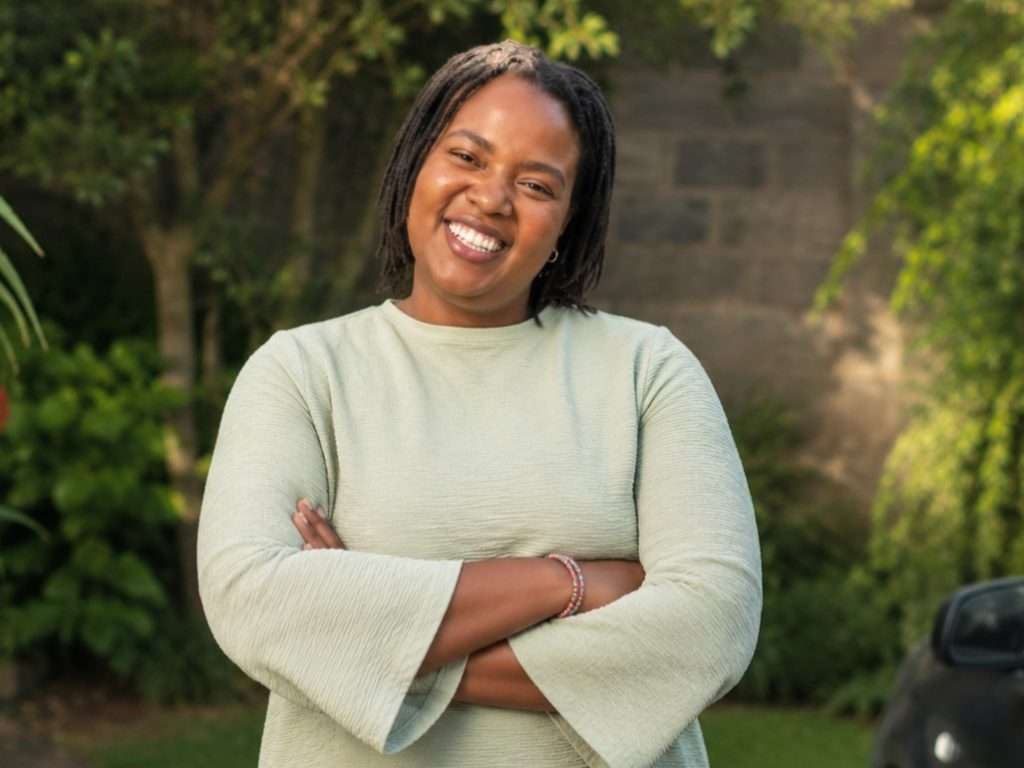
As head of human resources at Tsavo , Joansie Kinyanjui is helping shape a young workforce while building the company’s HR systems from the ground up. She believes mentorship, accountability and communication across generations are key to building strong teams.
Joansie Kinyanjui joined Tsavo in 2021 straight out of her final university exams, skipping a gap year and stepping into the office before her graduation ceremony even took place. She came in as an accountant, spending two years building spreadsheets while her formal academic training in human resources quietly waited in the background.
During a company retreat, a colleague made a passing remark that Joansie should be the human resources manager, noting her deep understanding of the company, her connection with the people and her clear passion for the work. When she returned for the following quarter, she discovered she no longer had a job in accounting.
“I remember that past year I kept asking myself, the school fees that my father has paid for me to study HR, where will I take it, since I'm just practising as an accountant,” she says. “It has been a very, very amazing journey since 2023 and I have grown in the process.”
Building foundations
As the head of human resources at Tsavo, a growing property management company in Kenya, Joansie faced the monumental task of building the entire function from nothing. Prior to her appointment, the company operated without a dedicated department or formal policies, relying entirely on administrators, lawyers and the owners to handle people issues. She found her first three months genuinely difficult, discovering that transitioning a workforce from having no structure into a structured system was a profound internal battle. She learned quickly that buy-in had to be earned from colleagues and management alike.
What guided her through the transition was an innate instinct to find the productive middle ground between the needs of the individual and the goals of the management team.
“My best moments have been when staff come to me voluntarily, either to share a problem or because they want more from you,” she notes. “Being of value, being needed has been the biggest highlight. Getting them to see me not just as their friend but also as someone who can step in when required and play the role of a human resource manager despite whatever prior relationship we have.”
Beyond her daily operational responsibilities, Joansie approaches professional development through a specific architectural lens. She thinks about workplace mentorship precisely the way she thinks about the structural growth of trees, illustrating how vital knowledge moves between individuals and across generations inside an organisation. In this living structure, the root serves as the foundational base, the bark holds the system together, and the highest branches only reach their impressive heights because of the strength established below.
“Mentorship allows everyone to grow and for information to be passed across. It is very important always to have a mentor and to have that mentor walk that journey with you continuously. And it is also okay to identify a different mentor at a different part of your life, because you've reached that point where now you need more,” she explains.
She points out that this perspective challenges the standard corporate model of mentorship, which traditionally involves one senior professional and one junior employee engaging in an indefinite arrangement. Joansie recognises that a mentor who served an individual perfectly at 24 is not necessarily the correct guide to navigate the complexities that arise at 34. As fundamental questions and professional stakes change, she says the required guidance must shift with them.
Growing together
Joansie frames the working experience as a continuous race where professionals frantically attempt to be the first to reach the finish line, often forgetting that other experienced individuals have already run that exact course. By actively seeking guidance from an older professional, a younger employee shortens their own path to understanding by learning from past mistakes.
“The reverse would be that this older generation would come to learn what this new generation is like from an individual perspective,” she points out. “They would come to understand what are these new things and new trends that are being taught in school or the new trends that they're finding within their workspaces. Having a mentor allows you to be accountable for your growth, accountable for your choices, accountable for the impact that you have on other people.”
This dynamic is critical at Tsavo, where the vast majority of her colleagues are peers who graduated around the same time and joined the company at a similar point in their lives. Managing this specific group requires a deep understanding of their unique perspectives, forcing her to adapt her communication style depending on whether she is speaking with a 24-year-old peer or a 40-year-old senior partner.
“If we don't communicate with them on their level, we will always be lost,” she states. “Let them come as they are and have a sit down. What is the expectation they want from the company? Because value goes two ways. The value you give me needs to be reciprocated with value from you. So, if there's no balance and I'm constantly talking, they will always have something to say about it.”
Joansie argues that walking alone on any professional journey limits individuals to their own isolated experiences. Engaging with mentors multiplies that limited viewpoint, ensuring the metaphorical tree continues branching outward as she continues the building process she began at 21.
“It is very important, always to have a mentor and to have that mentor walk that journey with you,” she adds.