
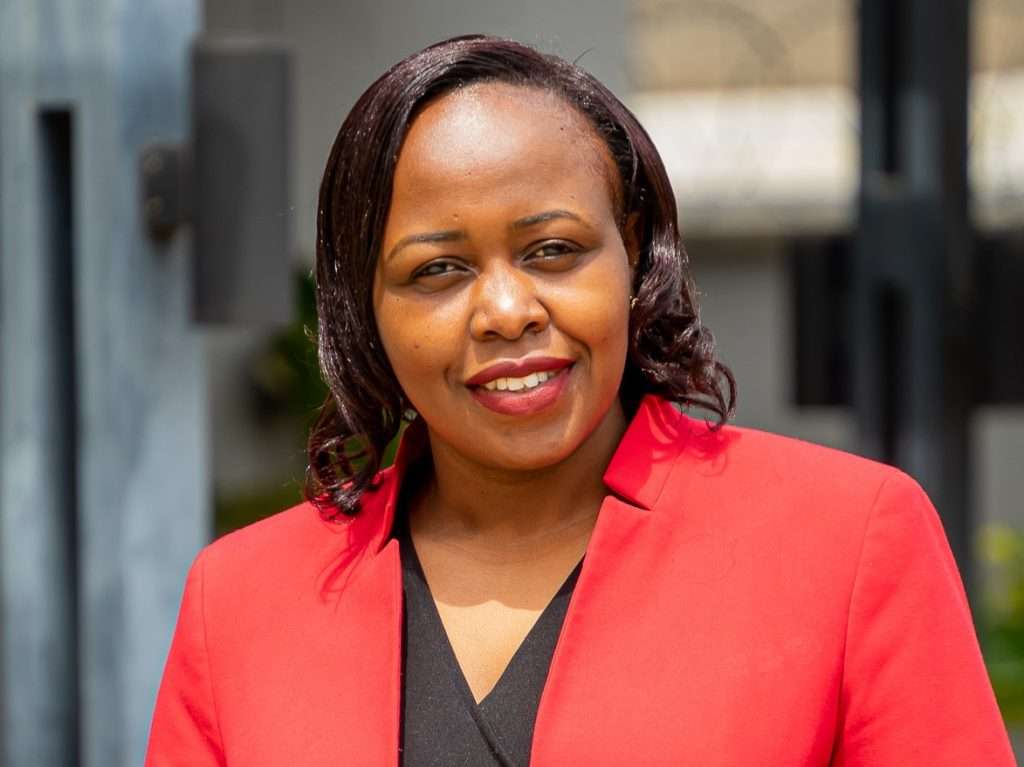
If she does not need to drive, Caroline Karoki prefers to be on foot at her own pace. Walking is when she reflects and creates space for herself in a life that is otherwise claimed by work, family, and responsibility.
Caroline Karoki is a wife, a mother of four with children aged between seven and 16, a daughter who keeps her mother very close, and people leader at ALN Kenya. These roles are not neatly separated. They overlap, inform one another and shape how she understands work, leadership and care.
Balancing roles
“I wear many hats,” Caroline says. “Those different roles force you to think more intentionally about balance, priorities, and the seasons of life people are navigating
Caroline is the head of people and culture at ALN Kenya, part of a pan-African legal network with presence in 14 African countries and an office in Dubai. Within the firm, she operates at the intersection of strategy, performance and wellbeing, helping translate business ambition into systems that support people through demanding careers. Yet her path into HR leadership did not begin with human resources at all.
“I am trained as an accountant, having completed my accounting degree and qualified as a CPA-K. Early on, I expected my career to be built around finance. But my first professional opportunity took me in a different direction,” she reflects. “I didn’t go into HR with a grand plan; it was more about being open to an opportunity that exposed me to how organisations truly function..”
As her responsibilities grew, so did her clarity. Caroline notes that the pull back to accounting became weaker, while her engagement with people-related work deepened. Eventually, she made a deliberate choice to shift disciplines, pursuing HR qualifications and committing fully to the field.
What followed was a career that moved through HR consulting and into professional services, including a four-year stint at KPMG East Africa. There, she collaborated closely with accountants and advisory teams, an experience that sharpened her understanding of how people's decisions intersect with commercial outcomes.
“That environment teaches you quickly that credibility matters. You have to understand what drives the business if you want your voice to count,” Caroline says.
That foundation made her transition into the legal sector more seamless than it might otherwise have been. When she joined Anjarwalla & Khanna, now ALN Kenya, she entered a world defined by precision, pace and high expectations. Over time, she grew into the head of people and culture role, a progression she attributes as much to organisational support as personal effort.
Growing into leadership
“I didn’t walk into leadership. I was trusted, challenged and supported into it. That journey has shaped how I think about leadership development. For me, growth is rarely accidental. It requires mentorship, exposure and leaders willing to invest time and trust in others,” she notes.
Her philosophy of HR leadership is anchored in business relevance. She is direct about the evolution of the function and the expectations placed on modern CHROs.
“People initiatives cannot exist in isolation, if you don’t understand where the business is trying to go, it becomes very hard to add value in a meaningful way,” she emphasises.
At the same time, she is wary of reducing people's strategy to metrics alone and believes that a person’s professional contribution is more complex than what can be captured on a spreadsheet. The balance, she explains, lies in alignment rather than dominance.
“You are constantly navigating competing interests.The real work is in finding that space where performance and humanity can coexist,” Caroline points out.
At ALN ,this thinking has driven a holistic approach to employee wellbeing- one informed by the realities of legal practice. Long hours, high stakes and client pressure are inherent to the profession, making sustainability a strategic concern rather than a soft add-on.
“We had to ask ourselves what it really means to support people in an environment like ours,” she says. “Not just in theory, but in practice.”
The result is an ecosystem that addresses physical, mental, emotional and spiritual wellbeing. The firm’s Nairobi offices include fitness facilities, spaces for rest and interaction, areas designed for reflection and in-house counselling support to complement structured wellness forums aimed at addressing the immediate needs of our people. Caroline emphasises that structured wellness forums create space for conversations that are often difficult to have in high-pressure environments.
“Mental health support is no longer a passing initiative-it is a permanent and essential part of the modern workplace. ALN now brings professional counsellors into the workplace each month, reducing barriers to access and normalising care as part of everyday work life. This commitment recognises a clear reality; the new generation entering the workforce faces evolving mental health challenges that require intentional, sustained support,” she observes.
For Caroline,wellbeing must be matched with opportunity - because people thrive best when they are supported, not just expected to cope.
“When support is closer, people are more likely to use it. That changes outcomes,” Caroline says.
Learning that flows
Caroline is a strong advocate for reverse mentoring, particularly in areas such as data, analytics and technology. Her emphasis on growth extends to how teams learn from one another, recognising that capability today is multi-directional.
“There are skills that younger professionals bring that simply didn’t exist when many of us were starting out. Ignoring that would be a missed opportunity,” she stresses.
Within her own team, she has intentionally created space for knowledge to flow both upwards and downwards.. Junior colleagues contribute emerging technical expertise, while more experienced leaders provide context, judgement and stakeholder insight shaped by experience.
“When learning becomes reciprocal, it stops being about hierarchies and starts being about value. That’s when it becomes a true partnership - where every voice matters and every contribution counts,” she explains
As artificial intelligence and automation continue to reshape the people's function, Caroline believes this exchange will only grow in importance. For her, adaptability is not optional- its essential
“The pace of change doesn’t allow fixed mindsets. You either learn continuously or you fall behind,” she says.
Outside the office, Caroline’s leadership is shaped by life beyond work. Her family anchors her, and she is deliberate about how she structures her time.
“Evenings and weekends are for home,” she says. “That’s non-negotiable for me.”
She is also engaged in mentorship and community work, much of it rooted in her faith and personal networks.
Rather than launching standalone initiatives, Caroline prefers to strengthen existing efforts, supporting causes that align closely with her values. Recently, this has included working with an organisation supporting vulnerable teenage girls and involvement in a medical camp for the elderly organised alongside her mother.
“Giving back helps you keep perspective,” she says. “It reminds you that leadership is not about the title you hold, but the difference you make.”