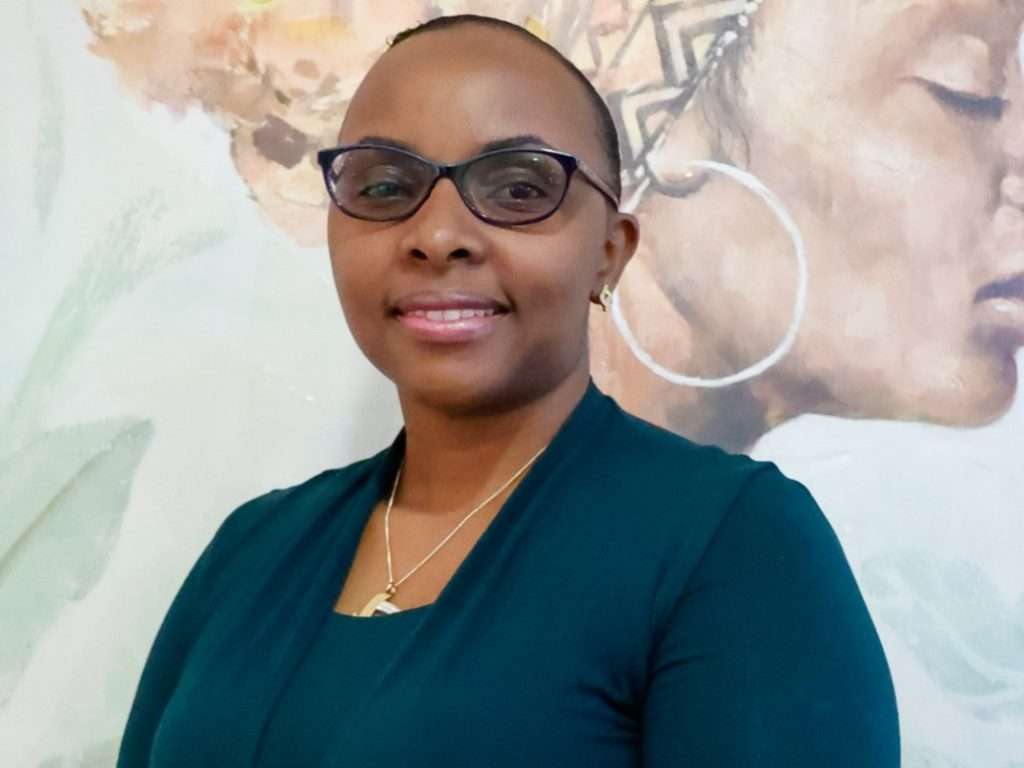
As head of HR for Kenya at Engie Energy Access Africa, now Ignite Energy Access, Lilian Mburu sees her role as central to guiding culture transformation and helping employees embrace new ways of working.
Lilian Mburu’s life outside work mirrors the people-centred approach she brings to the office. After a busy week, she unwinds by spending quality time with her husband and their two sons, aged 13 and 5. Together, they also facilitate marital training classes to help others strengthen relationships, while also enjoying activities that reinforce family bonds.
People at the centre
“In addition to family, I am actively engaged in various social and professional circles, whether hosting game nights, attending events, or participating in groups focused on personal growth and financial investment. My life still revolves around people,” she shares.
These values of trust, inclusion and guidance have guided her professional journey.
After two years and five months at Furniture Palace International K, Lilian joined Engie Energy Access Africa as head of HR for Kenya, where her mandate includes culture transformation, leadership capacity building, strengthening employee engagement and shifting perspectives. She says the role has been exciting because the organisation operates in about nine countries, creating room for regional collaboration and continuous learning.
“Moving to this role brought a new level of complexity and collaboration. I had to learn quickly how to manage teams in diverse locations while ensuring consistent principles of trust and fairness. This experience has reinforced the importance of leaders as role models in culture transformation,” she says.
Transformation has been a consistent thread in Lilian’s work, as she notes that one of her KPIs has been driving culture change across the business.
“After you have worked with people across different sectors you quickly realise that people don’t change because you give them policies,” Lilian notes, “They change when leaders model the behaviour, when teams feel included and when everyone understands why we are moving in a new direction.”
Leadership and trust
Lilian emphasises that leaders play a central role in maintaining and reinforcing workplace culture, noting that consistency and follow-through are essential for building trust.
“Do not make a promise you're not able to fulfil. Broken promises erode confidence and create a gap between leadership and employees. Maintaining integrity in commitments is key to strengthening culture and trust,” she explains.
When trust has been damaged, Lilian believes listening and action-based recovery plans are essential. Giving employees space to express concerns and following up with clear actions are central to rebuilding confidence.
“It’s important you first take the step to start listening. Then, you build from there, implementing actions that demonstrate you are serious about resolving concerns. Consequences for unacceptable behaviour and recognition for positive actions help re-establish the boundaries of culture and encourage employees to embrace new ways of working,” she underscores.
Throughout her journey, Lilian shares that the constant thread has been her commitment to seeing people grow.
“I get so much fulfilment when I'm seeing people having a different mindset that is future oriented. Personal transformation often precedes workplace performance and equipping people for now and tomorrow strengthens both individual capability and organisational progress,” she maintains.
Her biggest challenges, she says, revolve around people. Lilian faces frustrations when individuals fail to recognise opportunities or misuse them and when leaders do not fully appreciate the importance of investing in people while still expecting results.
“There are also times when leaders expect results without understanding the value of investing in their teams. These are difficult realities in the HR profession, but navigating them is part of the work,” she admits.
Purpose over comfort
Even so, Lilian’s view of her work remains rooted in purpose. She does not see herself in a static environment.
“I don’t believe I’m meant to be in a place that remains unchanged. Transformation involves helping people see their own potential, strengthening trust and re-shaping culture in ways that allow organisations to thrive,” she adds.
Lilian’s professional journey began when she chose not to wait nearly two years to start university. Instead, she took the initiative to work as a shop attendant, then shortly after opened a small business, gaining early experience and taking control of her career path.
“I had to do something, anything, to keep moving forward. That early experience taught me the value of action and stepping into opportunities. It shaped the way I approach challenges today,” she says.
She enrolled at The University of Nairobi to pursue a Bachelor’s degree in sociology and communication. While in second year, Lilian joined Stanbic Bank, where she worked for about a year and a half before shifting towards pursuing other administrative roles. Her foundation in understanding organisational processes and individual perspectives was further solidified at ICEA Lion Group, where she began as a HR intern and transitioned to the HR assistant role within three months.
“Working at Stanbic taught me the value of understanding people’s needs and processes early on. At ICEA Lion, I learned to see both the individual and organisational perspective. I also got first hand end to end exposure in HR. Every small action has an impact, and this experience gave me the foundation I needed to navigate more complex roles later on,” she explains.
In 2015, Lilian joined Wadi Degla Investments, a startup at the time, as the human resources manager. She was responsible for building the HR function, including recruitment, learning & development, policy development, performance management systems, employee benefits, rewards management, employee relations and payroll.
“It was a huge challenge setting up the Wadi Degla Club in Runda, increasing the staffing level from 5 employees to 120 within 6 months, more so in the sports sector which had a limited talent pool at the time. The learning curve was steep, almost like an upside-down experience, baptism by fire. But what I had gained at ICEA Lion gave me the confidence to find my footing,” she recalls.
Building trust before change
After six years and eight months at Wadi Degla, Lilian moved to Furniture Palace, joining as human resources manager. The company had, at that point in time, just acquired new majority shareholders - KITEA Group, a Moroccan organisation with a large retail presence and Tana Capital. Within a year, she was promoted to chief human resources officer.
“The board needed someone to transition the business into a more corporate structure, and they had already observed and recognized my role in driving that transition. The first year involved driving change hard, which was made possible through a lot of listening, observing and building relationships. By the time I stepped into the senior role, I understood both the expectations of the leadership and the concerns of the employees,” she explains.
In Furniture Palace, beyond structuring and strengthening the HR department, she focused on fairness and accountability, ensuring that promotions, incentives and disciplinary processes followed clear and just procedures. These principles became crucial when making difficult decisions, including role repurposing and retrenchments.
“My first instinct is to assure the employees that I wasn't coming to replace anyone. I spent time understanding people, their work and their concerns because that helped me make informed decisions that benefit both the organisation and the employees. It doesn’t mean everything they were doing was wrong, but it’s about evolving together,” she says.
Lilian observes that understanding where people were coming from became her first step in the transformation initiative. She prioritised building trust before introducing change, believing that meaningful transformation comes from collaboration rather than imposition.
“I always aim to show that we’re evolving together, not imposing change from the top. Clear processes and accountability help people feel secure, even when the organisation is undergoing transformation. This approach allows us to tackle challenging decisions without eroding trust,” Lilian emphasises.