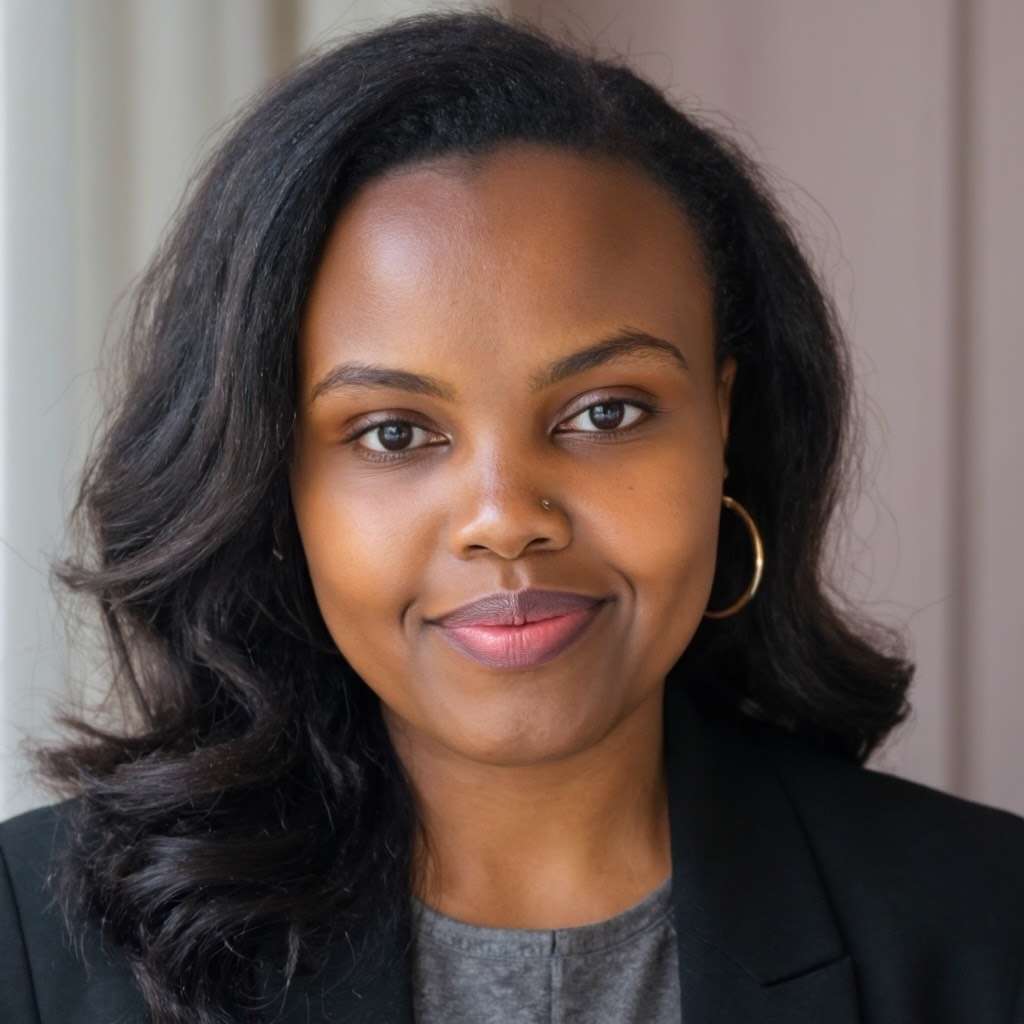
Eva Ng’ang’a is focused on reminding leaders that supporting their teams matters as much as hitting targets. With years of experience across industries and a disciplined approach to reflection and growth, she blends empathy, insight and action to help people and organisations thrive.
Eva Ng'ang’a is already deep into 2026 with a clear agenda. As the head of people and culture at Amadeus Eastern Africa, she isn’t chasing the latest HR trends or shiny frameworks. Instead, she’s concentrating on something more fundamental and urgent: ensuring that managers really know how to lead their teams.
Her priority for the year is the same conversation she keeps having with leaders who would rather talk about targets than talk about their teams.
“Too often, managers fail to recognise the urgency of supporting their teams. Employee development and well-being are treated as a by-the-way, secondary to operational demands. Yet without genuine support, performance and engagement suffer” she says. “My goal is to remind my leaders that even as they discuss numbers and all that, if their people are not well taken care of, they will not achieve the goals or the productivity that they want to see.”
Since 2020, when the world slowed down, she discovered Arboretum Park in Nairobi, and has been walking five kilometres a day, Monday through Friday, starting at half past six and finishing by half past seven before heading home to prepare for the office.
“It's my me-time. I would say it’s a spiritual type of thing. That's when I think about if I've made a mistake or if I'm not getting along with someone, I think about ways to improve a situation. I count my blessings. I think about my day and how to make my day better,” she says.
Eva notes that Nairobi demands that kind of reset. The traffic, the pace, the weight of a role that puts her between the organisation's numbers and its people's livelihoods, all of it makes an hour in the park not a luxury but a necessity. She also travels alone at least once a year, no partner, no children and no friends. Just the discipline of arriving in an unfamiliar place and finding her own way through it.
“I love the art of meeting new people in new places I've never been to and forcing myself to make those friendships. Every time I get to do these tours by myself, I feel like I discover something new,” she says.
Rooted in people
Eva grew up in Kenya and studied management science at Strathmore University, graduating with a double major in management science and microfinance. She describes herself as naturally empathetic, a people's person long before she found a profession that matched it. The match was not entirely planned. After graduation, during the uncertain period between finishing a degree and understanding where it leads, she got an internship at Telecom Kenya during their rebranding to Orange. She was placed in the HR department as a project’s coordinator.
“As a project person, you get to learn the end to end of HR,” she recalls. “I was not just assigned to say learning and development or recruitment. I did all-round. I used to go to each manager asking them to give me a status update on their project. That exposed me to the HR world.”
From there, Eva joined Coca-Cola as a management trainee, completed a year of structured training, and was posted to the HR department as an HR advisor supporting the manufacturing division. She loved her job, but did not stay, a move she considers to have been premature. In hindsight, she believes she should have stayed a little longer than the two and a half years. However, she also recognises that missteps can guide us toward our true path, and today she feels fortunate that the universe was redirecting her toward greater opportunities.
A peer from Strathmore was building a real estate company and needed someone to set up the HR function from scratch. Eva took the risk.
“It was a really small organisation compared to where I was coming from, but I always say to people who are trying to find their footing, that was the best decision I ever made. It exposed me to the basics of HR. From contracting, to filing, things I would ordinarily not do elsewhere,” she says.
Three years later, PwC came looking. Eva was not searching for a move, but she applied and got the role. As an HR business partner there, she applied for a development secondment in Rwanda and served as HR manager for two years, the point, she says, where her leadership journey properly began.
“After 4 years with PwC, I joined the BBC as an HR specialist supporting the Eastern Africa region, moved within the BBC to its charity arm, BBC Media Action, as the global head of people and culture, and spent six years across both entities,” Eva says.
She now leads people and culture for Amadeus Eastern Africa, a technology company whose systems power the booking platforms used by most airlines and travel agents across the region.
The bias that does not announce itself
Eva is petite. She has a face that does not betray the decade and a half she has spent inside some of the most complex organisations in the region. People often tell her she looks young. She takes it as a compliment, but she also knows there’s a downside, assumptions about her experience or capabilities can follow.
“Looking youthful can also mean that you are inexperienced, or that you're just being ambitious, too ambitious for life. But people forget that it's the value that you add, the experiences that you bring on board, the wisdom that you come with in that role,” she adds.
Eva notes that age bias affects both the young and the old. It often goes unnoticed, showing up in first impressions, in the pause before a handshake, and in the subtle recalibration that happens when someone doesn’t look like the person people expect to see.
“It's done silently,” Eva says. “People have perceptions about people or their status, and they make decisions based on those perceptions, which is not okay.”
Eva is a direct witness to it. She believes, without dramatising it, that people have lost opportunities because someone in a room somewhere decided that a face like theirs could not carry the weight of the role on offer.
“I always remind leaders that such biases could actually make someone miss out on a really, really good candidate because of just thinking that they're not experienced enough or too old,” she says.
What she tells candidates
The practice Eva advocates is specific. She tells people, young candidates and older ones alike not to include any personal detail on a CV/profile that gives a decision-maker an opening to reach for a characteristic rather than a qualification.
“Your skills and your experiences should be the ones selling you, not your age, whether young or old, black or white, African or whatever,” she says.
Eva points to European hiring practice, where asking about age or marital status carries legal implications and is treated as a protected characteristic. In East Africa, the conversation is less formalised. They get asked, she notes, in ways designed not to look like what they are, a request for a document here, a form there while the intent remains the same.
Over the years, Eva has facilitated unconscious bias training for hiring managers helping them make more inclusive and objective recruitment decisions. The principle behind it is the same one she returns to in every version of this conversation: familiarity is not a reliable guide to quality.
“We always look for someone who looks like us or who does things like we do, because that's familiar to us,” she says. “But that definitely, in the end, might cause us to miss out on really good candidates.”
Eva is fifteen years into a career that has moved across technology, manufacturing, financial services, public broadcasting and the NGO sector. She sees her career across industries as a form of training, each role sharpening her skills and preparing her for the challenges ahead.
“If you throw me anywhere in any industry, chances of me thriving are high because of these experiences that I've had,” she says.