
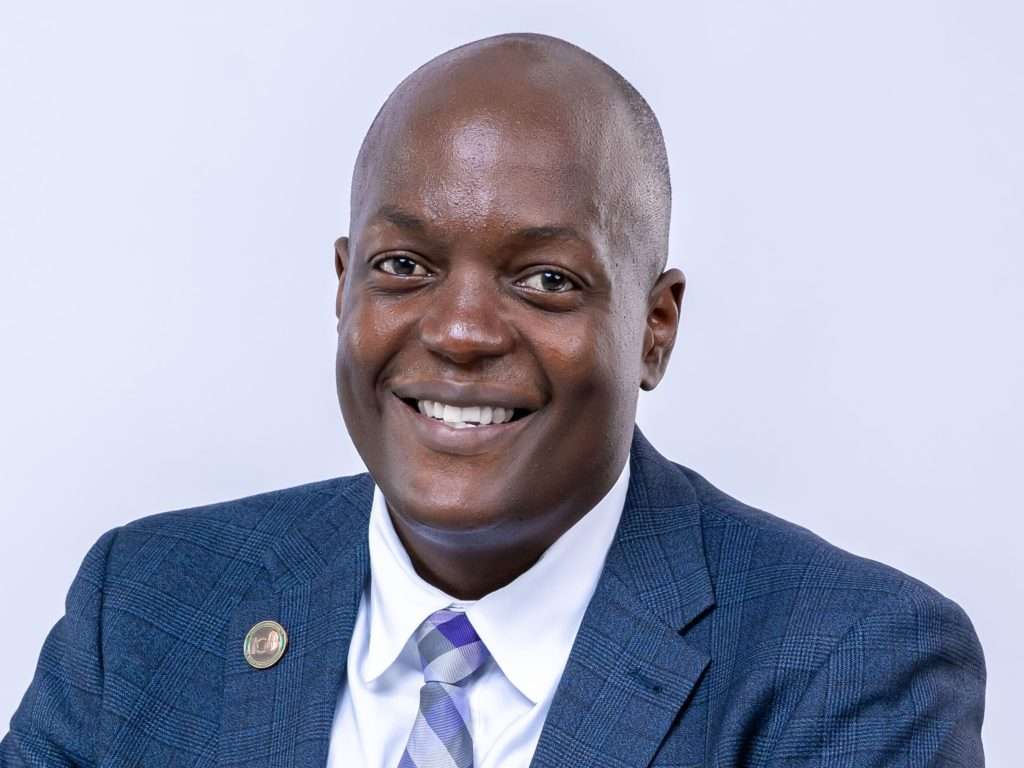
When Paul Rumanda joined the Infectious Diseases Institute as its first head of HR, the department was reporting to the finance department. In just three years, he built a strategic HR function from the ground up, driving culture change and leading a bold organisational restructure amidst volatile donor funding.
Paul Rumanda’s current role as the inaugural head of HR at the Infectious Diseases Institute (IDI) in Uganda, marks the result of years of strategic work and a clear belief that HR should be a core part of any organisation’s leadership. Paul explains that when he joined IDI in 2022, the HR function had been a small unit under finance and administration for more than 20 years.
He took on the task of turning it into a fully independent and strategic department. This meant introducing new policies, improving key processes and driving a shift in culture for performance to recognise people as a key asset in achieving IDI’s goals.
“My tenure at IDI has been marked by scale and complexity. I have managed massive organisational growth, increasing the staff count from 2,300 to about 3,600 people spread across Uganda and sub-projects across Africa,” Paul notes.
To manage this scale, Paul has spearheaded major organisational development initiatives, like rolling out the human resources business partner (HRBP) model, automation and digitisation, performance management and organisational review. He notes that one of his key priorities at IDI has been transformational, adding that they have also implemented an applicant tracking system and digitised many of their core HR processes to improve efficiency.
“On the performance side, we’ve overhauled the entire system to focus on more agile, outcome-based metrics. We also undertook a full organisational review, our structure had grown organically over more than 20 years, so we needed to realign it with the institute’s current operational focus, which now includes six programmes and four support departments,” Paul explains.
Paul notes that at the moment he is tackling one of the sector's most high-stakes challenges of building a sustainable institute and managing organisational restructuring amid volatile US government funding dynamics. He adds that the ability to pivot between profit, social impact and governmental sectors proves that a foundational understanding of human capital is the most transferable skill in the modern economy.
“Our focus for 2025 is survival and sustainability in the event of reduced funding,” he states. “This means strategic rightsizing and ensuring that the people we retain are the most skilled to deliver on our core social impact mission.”
Discipline and drive
Paul’s commitment to discipline and peak performance extends beyond the office and is rooted in a pivotal personal decision. He is intensely passionate about running, a habit he started in 2013 after being diagnosed with pre-gout and being told by a pharmacist that he needed to change his lifestyle. Paul notes that when he started at 130kg, he could barely walk five kilometers, but over a four-year period, he dropped to 90kg.
“I run every day of my life, it doesn’t matter if it's raining or if I'm in a different country. My day starts at 5:00 with a run,” he states, detailing a routine that has seen him complete three full marathons and maintain a non-negotiable wellness regimen.
For him, running is more than just exercise, it is therapy, discipline and a source of renewal.
“Running is my drug after my coffee. It's the next thing that I look forward to. In 2020 during Covid lockdown, I took on a leap-year challenge, running for 366 consecutive days,” he says with a smile. This unwavering discipline serves as a powerful metaphor for his approach to his professional life, consistent effort leading to massive transformation.
Finding purpose
Paul’s journey into HR was a deliberate choice from a strategic mind. Straight out of his A-levels, he targeted a law degree but narrowly missed a government scholarship by a crucial 0.3 points. He notes that while pursuing a BA in social sciences, he had a key realisation during a management module, recognising that HR was the field where he could most strategically influence an organisation’s success.
“I quickly realised that I needed to combat the executive mindset that believed HR issues should be left solely to the HR department, and my mission has always been to show the value HR brings to the table by aligning our people strategy directly to the organisational strategy, making our function indispensable,” Paul reflects.
He explains that his clear sense of purpose quickly translated into an intense early-career hustle, driven by a desire to break into the corporate world. To gain a foothold, Paul accepted a position in Telecom in 2005, even though it required starting out in the mandatory customer service desk. Despite being paid well in a previous NGO role, Paul says he was focused on building a long-term career in HR. When it became clear that the customer service role offered no path in that direction, he resigned after a year.
“Just 10 days after I resigned, I walked back into the CEO’s office and asked for my job back,” Paul recalls. “Luckily, Telecom was going through a rebranding process, so I didn’t return to customer service, I was placed in operations. Later, I was appointed customer relations manager and also took on HR responsibilities. That’s when I knew I needed to back up the experience with formal training, so I enrolled in a postgraduate diploma in human resource management.”
Breaking barriers
Paul shares that his career took a defining turn in 2008 when he joined the Toyota Tsusho Group. He recalls building his foundational HR experience at Toyota Uganda, where he was responsible for day-to-day operations, from recruitment and onboarding to drafting budgets and participating in quarterly business reviews. In 2010, Paul moved to South Africa to take on a regional role as a human resource consultant for Toyota Tsusho Africa. His mandate, he explains, was to implement shareholder-directed HR policies across seven countries (Angola, Kenya, Malawi, Mauritius, Zambia, Zimbabwe and Uganda).
“This involved overseeing large-scale projects such as performance management rollouts, staff engagement surveys, designing an expatriate mobility policy and coordinating expat support services through international providers. We actually worked with a provider to get a fully online balanced scorecard system in place. I was dealing with everything from Bupa International for healthcare to complex labour laws," Paul recalls.
He notes that the experience, spanning the telecom, automotive, healthcare and NGO sectors, taught him one undeniable lesson, that one must deeply learn the business of the business to be an effective HR partner. Paul explains that in Telecom, it was about subscriber numbers and airtime sales volumes, where his strategy needed to support that. In automotive, it wasn’t just about selling new units, he had to focus on the after-sales arm, where the output was selling man-hours of labour and spare parts.
“Our talent strategy had to ensure we had the right technicians, with the right skills, to sell their time effectively. In 2020 when I moved into healthcare at International Medical Group in Uganda, the focus immediately shifted to engaging and retaining nurses and doctors. Now, in the NGO world, it’s about understanding our six different programme areas and how our people strategy supports them to achieve their social impact outcomes,” Paul adds.
Paul sees HR as more than just an administrative function, to him, it is the driving force behind an organisation’s strategic goals. Whether he's setting global policies, restructuring a national institute, or serving on boards, Paul believes success depends on demonstrating that people are central to achieving results.
“HR isn’t about ticking boxes or managing processes. It’s about understanding what drives the organisation and shaping the people's strategy around that. In every sector I’ve worked in, HR must reflect the core business goals. When that happens, HR stops being a support function and becomes the engine that powers growth and impact. That’s where the discipline and leadership in HR truly lies,” Paul maintains.