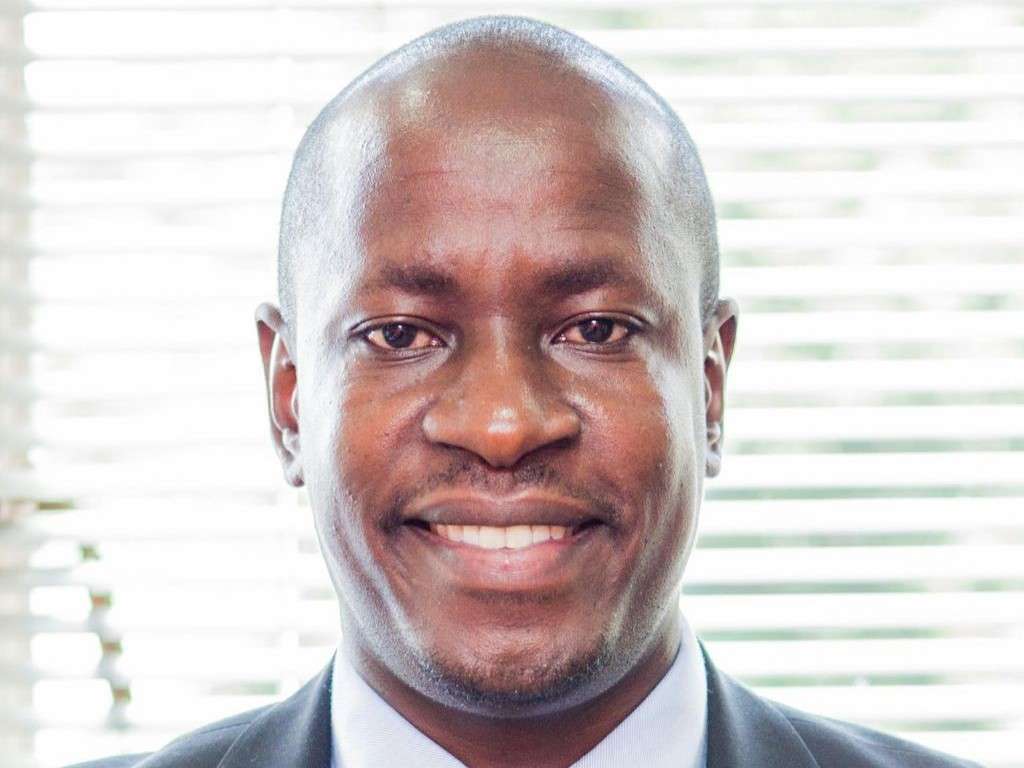
Felix carries the weight of difficult organisational decisions long after the office lights go out. His role is not simply about organisational design, but about stewarding people through transition with dignity, transparency and support.
Felix Ochieng, general manager for people and culture at Liberty Kenya, learned what loneliness feels like in a foreign country - each evening, after a day of conversations about business performance, careers, change and structure, he returned to an empty house. This was during his international assignment period at Standard bank with his last duty station leading the human capital function at Standard Bank Malawi, while his family remained in Kenya.
“I wouldn’t say I was depressed, but loneliness always kicked in especially in the evenings,” Felix says. “You go to the office every day and put on a brave face as an HR professional because you’re focused on changing lives, making an impact on the business and building your career. But when you go home, in the quiet moments it’s a different story. You are reminded that leaders too are human and as they say, doctors can’t treat themselves.”
Redesign with dignity
This experience at Standard Bank shaped how he thinks about his career and how organisational change affects employees across the full employee lifecycle – from attraction and onboarding, to development, performance, reward, succession and, at times, exit.
“Bad news remains bad news, regardless of packaging. The responsibility of HR leadership is not to dilute reality, but to communicate it clearly, respectfully and responsibly.” he says.
Felix’s entry into HR was not linear. With an economics background, he initially anticipated a different professional trajectory. A short analytical assignment in learning & development at CFC Bank (now Stanbic Bank Kenya) pivoted his career toward human capital strategy.
“I got inducted and exposed to a lot of HR stuff which was interesting and that’s how I got myself into HR. I got ingrained into supporting people, managing people initiatives within the organisation,” he says.
Curiosity drove him deeper. That pivot evolved into postgraduate and master’s qualifications in human resource management, complemented by regional exposure across East and Southern Africa. These cross-jurisdictional mandates exposed him to regulatory nuances, labour market dynamics, and culturally distinct employment practices.
“Every time I went out to a different country, I thought I knew what to expect, but when I got there, I had to pause and realise that what worked in Kenya or Uganda might not apply here. Discovering the subtle differences in employment practices turned out to be one of the most fascinating parts of the journey,” he admits.
Those experiences proved useful when he moved from banking into insurance in 2018, at Liberty Kenya. His initial mandate was structural redesign to operationalise a ‘one company, one brand model — integrating short-term and long-term insurance businesses while maintaining regulatory compliance and operational efficiency.
“There were certain key functionalities where it was felt that, because of operational reasons, might actually fall off, resulting in impact. That became my first key assignment,” he reflects.
For Felix, organisational redesign is not about ‘fixing’ businesses, but about aligning structure, capability and culture to strategy, while safeguarding employee dignity and sustaining engagement for those who remain. Felix does not talk about this transformation process in abstract terms, he focuses on right business preparation, clear communication and understanding the limits of what any HR leader can do to soften the impact to employees.
Discipline on and off the course
“The reality is no matter how best you try to present the broader organisational picture, structural change communication is never easy. We dread some of those conversations, because when you’re talking to someone, you can never know what’s going through their mind,” he says. He believes that uncertainty causes more harm than clarity, even when the answer is unwelcome. He speaks in practical terms about what organisations can control: timelines, benefits continuity, financial buffers, and psychological support.
In his experience he notes that extension of benefits i.e. medical, psychosocial support, maintenance of services at preferential rates enjoyed by the employees plays a big role in creating that soft landing and preserving the dignity of the employees. For Felix, the role of people & culture is not to be the bearer of bad news, but to be a custodian of fairness, clarity and humanity in moments that test both organisations and individuals.
Felix’s people strategy focuses on helping employees grow and succeed. He supports talent development programs, professional certifications, employee wellbeing, leadership development, and building a strong, positive culture. All of this helps make the organisation more resilient and better prepared for challenges. In his view, the ultimate measure of HR leadership is whether employees feel valued at every stage of their journey, including when business realities demand difficult shifts.
Beyond his professional role, his approach to growth and discipline also shows up in his personal life. Felix turns to golf when he’s outside the office. He began playing in 2013, inducted to the game by a mentor while working in South Africa. What started as a pastime has now become a regular routine.
“I am a social golfer,” he says. “I find golf very therapeutic, it mirrors executive leadership where patience is tested, there is a lot of reflection, measured risk and relationship building.”
Having led across banking and insurance, and executed multi-market transformation mandates, Felix is increasingly focused on enterprise leadership beyond functional HR.
“I see myself leading a business before retirement. Understanding people, structure and culture is fundamental to enterprise performance.”