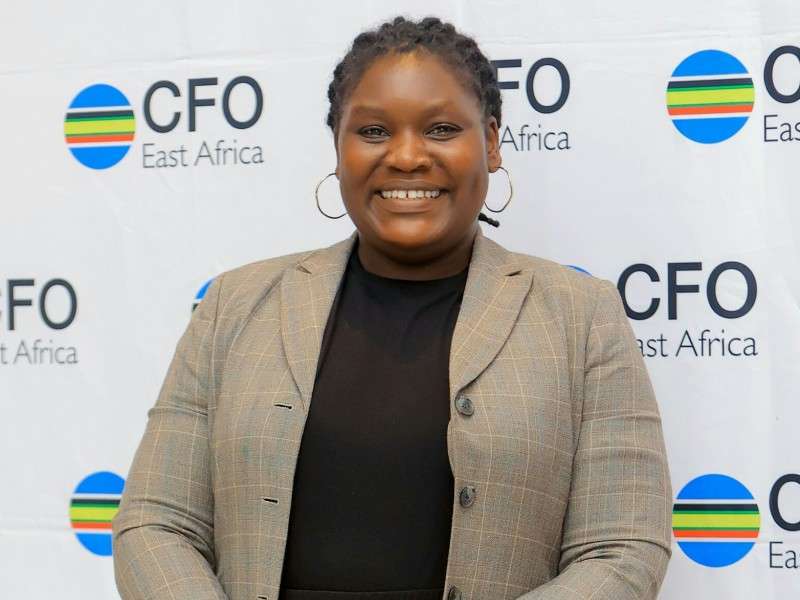

Meet Raymond Muthama, CHRO at Zamara in Kenya. A visionary HR leader who transforms workplace culture, combining business acumen with a passion for people to create synergy and lasting success.
Raymond Muthama does not believe in responding to job advertisements. It is a cold morning in August, and we are in the midst of a Zoom call. He sits upright and breaks into a smile.
“If I see an ad where someone is looking for a CHRO, for example, that is not for me, because someone who engages with you and gets to know you for the first time because they saw your CV after responding to a role does not know you. You’ve got to establish a relationship with the leadership, because then they know what you stand for and why you are there,” he says.
This may seem an odd statement for a human resources practitioner, but Raymond is not your run-of-the-mill HR expert. He is the chief people and culture officer at Zamara, the largest pension administrator and actuarial firm in East Africa. Raymond has cemented his legacy as a leader in his field, having ascended to the position of regional head of human resources at accounting firm KPMG at the age of 34.
Career inspiration
Equally notable is the philosophy that propels his career journey. Raymond’s impetus for joining the field came in the form of an epiphany he had after reading former General Electric (GE) CEO Jack Welch’s ‘Straight from the Gut’. The book, a copy of which was donated to the library of a club his father belonged to, reoriented his career.
“This is a CEO with a PhD in engineering, and when I read through the book, all he talked about was people. I’m still thinking about it now, and this is a book I read 28 years ago,” he says.
Jack Welch, the illustrious but polarising former leader of GE, is credited with overhauling the company’s corporate culture by adopting a distinctively personal style of management. His memoir, published in 2001, was the seed that sprouted Raymond’s career in HR.
Spurred by a newfound love for people, Raymond, then a fresh economics graduate of the University of Nairobi, contacted a former classmate from high school who worked for KPMG at the time and requested to be introduced to the firm’s HR director. His friend obliged, and when Raymond secured a meeting, he sought guidance about his desire to pivot into the field. Counterintuitively, he did not ask for a job.
“I asked her for guidance about postgraduate course options, which she provided. I then told her, ‘If you ever need a hardworking gentleman to work with you, here’s my CV,’ and left,” he says.
He then joined the Institute of Human Resource Management to pursue a postgraduate diploma in human resource management. Six months after his meeting at KPMG, Raymond received an internship offer. Raymond returned to the audit firm, where he cut his teeth in the HR profession, eventually rising to head of human resources. But two years into his appointment to the position, he left the organisation to pursue an executive course at Stanford University’s Graduate School of Business.
“I was the regional head of HR at 34 which was quite young, and I felt I needed to take a break, exhale a bit and create a new tangent in my career. So, I did exactly that,” he says.
Becoming a consultant
During his hiatus, Raymond tried his hand at consulting, helping establish the HR function at Gatsby Africa, which had received $50 million in seed funding to set up shop in East Africa. After his studies, he returned to in-house practice, joining Anjarwalla & Khanna (ALN Kenya), where he led the HR transformation at East Africa’s largest full-service law firm as head of people and culture. His early days at the firm were a test of tact.
“You’re coming in as a HR practitioner, to tell a bunch of lawyers, who believe they understand employment law, ‘Here’s where you’re getting it wrong. You can imagine how that could go,” he says, laughing. “It was tough, but you’ve got two options. You either surmount or succumb. And it was good.”
Raymond’s modus operandi is creating synergy between a brand and its people. This has been the secret to his pioneering work as a HR practitioner. He uses the tango, a Latin American ballroom dance, as a metaphor for the delicate balance he says the HR function must strike between the success of a business and the wellbeing of its workforce. “I am very passionate about creating a good employee experience. I believe it and I live it and I would do anything for people,” he says.
Flexibility and agility
With Raymond at the helm of its HR function, ALN developed a novel employee value proposition and an agile workplace (AWP) that allowed employees to work flexibly. The firm was the first in Kenya to offer six months’ maternity leave, twice the statutory provision. The firm also offered employees free lunch, discounted laundry services and gym subscriptions, and free transport. “We got Art Caffe to set up shop in the building and offer 20 percent discount to our staff,” he says.
Raymond attributes these achievements to securing buy-in from business owners. The biggest challenge for HR practitioners, in his view, is integrating a commercial sense of business as they push the ‘people agenda’. He aims to turn around the perception of people-centred HR initiatives as a cost and distinguish himself as a business leader discharging the human resource function.
“My background in economics did help, as I’m comfortable with numbers. On the first day of work, I sat down with the managing partner and asked him to identify his three biggest pain points. I also met people one-on-one as part of my pulse check on the organisation,” he says.
From this initial assessment, Raymond developed a four-year HR strategy that revamped the firm’s work culture and captured the attention of Zamara CEO Sundeep Raichura.
“The AWP caused a buzz, which secured me an invitation to speak at a HR forum in 2019. The CEO of the host organisation was a friend who had wanted me to join his organisation, which is Zamara. But I asked for more time, as I wanted to see ALN through,” he says.
He joined Zamara in 2021 and prepared a four-pillar, five-year strategy that he says most staff know by heart. Raymond says the organisation aims to foster a high-performing culture and become an employer of choice. But he has had to make tough decisions to bring this vision to fruition.
“You must have the gravitas to separate with staff if you must. But do you do it with dignity and ensure zero lawsuits? The biggest challenge with non-performance is failure to follow due process, as the brand at that point is in a hurry to let go of an employee. But I have my personal brand as Raymond, and I must make sure staff separations do not trigger lawsuits, as they would mar the brand, which must still be attractive to talent,” he says.
But when he approaches business owners with his value proposition, he shelves the ruthless pragmatism for a more tactful method. At Zamara, Raymond began by administering a survey and speaking to people one-on-one. This gave him the raw feedback he needed for a report that detailed the organisation’s strengths and areas for improvement. He swears by this strategy, saying it softens the blow and makes C-suite executives more receptive to his recommendations.
From the survey, Raymond created a strategy that broke down Zamara’s broader vision into actionable steps. He then met with the board of directors to galvanise support for the plan. “The question is, do you believe in high performance? Do you believe that if you take care of people, they will take care of your clients? This is not splashing money. This is looking at both sides,” he says.
At the right time
A stickler for strategy, Raymond advised Zamara against competing for any HR awards until 2024, the fourth year of its strategy. This is part of the organisation’s growth plan. As a way to extend the brand’s impact, Raymond organised the East African HR Summit, which brought together 25 notable experts in the field, the overwhelming majority of whom he calls his friends. With only transport and accommodation catered for and no honorarium offered, Raymond is grateful that the speakers honoured his invitation to the two-day event, which took place in the South Coast of Kenya. He plans to host the second annual event of its kind on 5 and 6 September, with the pre-summit speakers briefing and conference already out of the way.
“If you want to make an impact, speakers should not meet for the first time on stage. By the time you’re doing the summit, the panellists and speakers are friends, they know the content and are comfortable with it. In this way, you make an impact beyond the organisation, with the community around it, and within the HR profession. This gives meaning to the profession and to Zamara,” he says.
His vision for Zamara has seen him adopt an immersive leadership style that implants the HR function in every facet of the organisation. The firm, for instance, moved to its current premises, Zamara Place, in 2023. Raymond was involved in every stage of the building’s construction, from tendering to design. He spent every Friday at the site, keeping an eye on the project. This dedication, he believes, is shared by Zamara’s staff, who he says are behind the firm’s most compelling storytelling.
“People think we have actors, but we do not. Organisations do not own a brand. A brand is owned by the people. Organisations steward, but a brand is co-created by the people, and if you give staff the opportunity to co-create it, there is nothing more lasting and impactful,” he says.
Life at home
Raymond’s life at home is as full as his storied career. He is a doting father to his teenage daughter and speaks fondly of his wife, who is also a HR professional. Raymond is also a staunch Christian. A search on online video sharing platform YouTube reveals a series of sermons he has delivered at FEM Family Church, where he serves in the leadership team. In the outsize worship chamber, Raymond gives his homilies with the quiet conviction of a man certain of his words.
His precision at work bleeds into his enthusiasm for the German Shepherd, a dog breed known for its intelligence and versatility. Raymond has attended dog shows across the continent, with his oldest dog, Moritz, winning the title of ‘Best Male in East Africa’ in 2015 and 2016. In July, the East African German Shepherd Club invited Raymond to bring 13-year old Moritz to a dog show for his ‘final lap of honour’. He speaks about dog breeding with the same fervour as he does his work.
“These shows are like beauty pageants. The dog cannot be shy or afraid. Look at its conformation, its topline, and its height. How does the dog move? Look at its gait. Does it move with conviction? Look at its eyes. Are they dark? If they are light, that’s an ‘X’,” he says.
For HR professionals, Raymond has a challenge: to pitch an idea and create a compelling case for it. This, he believes, is how one moves from the conception of an idea to a persuasive case that a brand’s leadership can see connect with its people. “The world is not devoid of ideas. The issue is buy-in. How do you get leaders of organisations to see what is in it for them? Sometimes, as HR leaders, we skew too much towards people, and leaders do not feel heard,” he says.
Raymond encourages practitioners in the field to break beyond the employee protections offered in Kenyan law and improve the entire HR value chain to create a people-centric work culture that elevates brands and enriches the entire profession. He suggests a simple task to begin with: listening to people.