
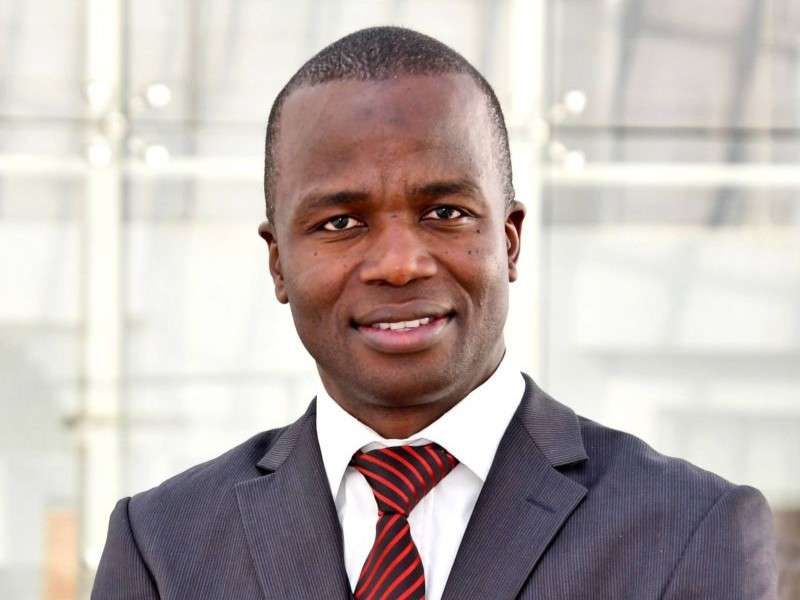
Saruni Basecamp CHRO Gerishen Katieno’s journey proves that human resources is not about paperwork but building trust, driving culture change and creating lasting business impact.
Gerishen Katieno says that HR departments in many organisations have operated quietly in the background, focused on day-to-day employee issues. But for him, that model has low value creation to stakeholders. He believes it’s holding businesses back. His mission? To place HR at the very heart of organisational transformation, where people, purpose and performance intersect.
Despite this clearly articulated purpose, Gerishen didn’t always plan to work in the people management space.
“I didn’t start with a focus on HR. I was supposed to pursue a course in education and possibly become a university lecturer, but I chose management instead,” he says. “During my internship period, I was given a task to clean up an archive that had been a big problem for the organisation for a long time. And the way I approached it with commitment and order made a difference. That’s when I got an opportunity to start my career in the HR profession.”
He says that that opportunity turned into a calling. And over the years, it became a leadership philosophy rooted in discipline, empathy and execution.
With over 15 years of experience in human resources, change management, organisational development and leadership across various industries and countries in Africa, he currently serves as CHRO at Saruni Basecamp, where he leads strategic HR efforts within the sustainable tourism sector.
His professional journey has taken him through different sectors of the economy: not-for-profit institutions, health care, tourism, IT and agribusiness, spanning Kenya, Uganda, Tanzania, Rwanda and extending into Zambia and South Sudan.
“Most of the organisations I’ve worked with were undergoing transformations, restructuring, mergers, or acquisitions,” he says.
Transformation and turnaround
One of his most notable turnarounds took place in one of the firms with a troubled HR history. The longest that any HR professional had stayed in the role before him was just three months.
“There was interference from different stakeholders, inconsistent decisions, weak trust levels between employees and investors, and the employer brand was damaged. It was a nightmare to source and attract quality talent,” he explains.
Rather than shying away from the challenge, Gerishen says he leaned in with commitment and urgency. Within six months, he had worked with the top leadership to onboard the missing key resources at group level, brought in fresh talent, and begun rebuilding trust while reshaping the organisation’s internal culture.
“I set up a group HR function, redefined structure, harmonised the policies, and started to reestablish trust levels within the organisation as part of culture transformation. We changed the narrative and within a year the organisation was on its feet, and the trend of high employee attrition rates was broken,” he says.
Stop speaking in HR language
Gerishen had frequent opportunities to deliver this kind of turnaround. While working in a previous job in an IT company, he led the way in creating a remote work system even before Covid-19 made remote work common.
“I collaborated with other unit business leaders to develop a model to accommodate remote work for roles that didn’t require daily office presence. A year later, over 70 percent of the staff were working remotely, just as the pandemic hit. That foresight meant the company didn’t skip a beat,” he says.
He notes that those weren’t just HR wins, they were business wins, which is exactly the point he has always tried to make.
“HR has to stop speaking only in HR language. We need to translate what we do into business outcomes and that’s how we earn our space at the strategy table,” he says.
In his current role, Gerishen says he leads with clear, actionable priorities. Among them is culture transformation, a particularly important focus in the wake of an acquisition and merger process.
“Post-acquisition culture integration is always a challenge. My role is to help build one culture that embraces the heritage but is aligned to the future,” he says.
Gerishen’s vision isn’t limited to culture and people; it also extends deeply into systems and technology. He says that for him, digital transformation is not just about cutting-edge technologies-we are not scientists, it’s about redesigning how HR works, and more importantly, how HR leverages tech to create value.
“We’re deep into digital transformation. Automating HR processes, and upskilling employees are core priorities. AI should be an enabler, but not replace human creativity or empathy. We must preserve the human touch in all our interactions, especially in HR,” he explains.
And to young HR professionals, his message is clear: they shouldn’t undermine the very ancient tenets of success that is expressed through discipline, sheer commitment and sound moral principles
“It’s not about how loud you are. It’s about how relevant you are. So, understand your business, bring value, and be consistent. That’s how you lead,” he says.