
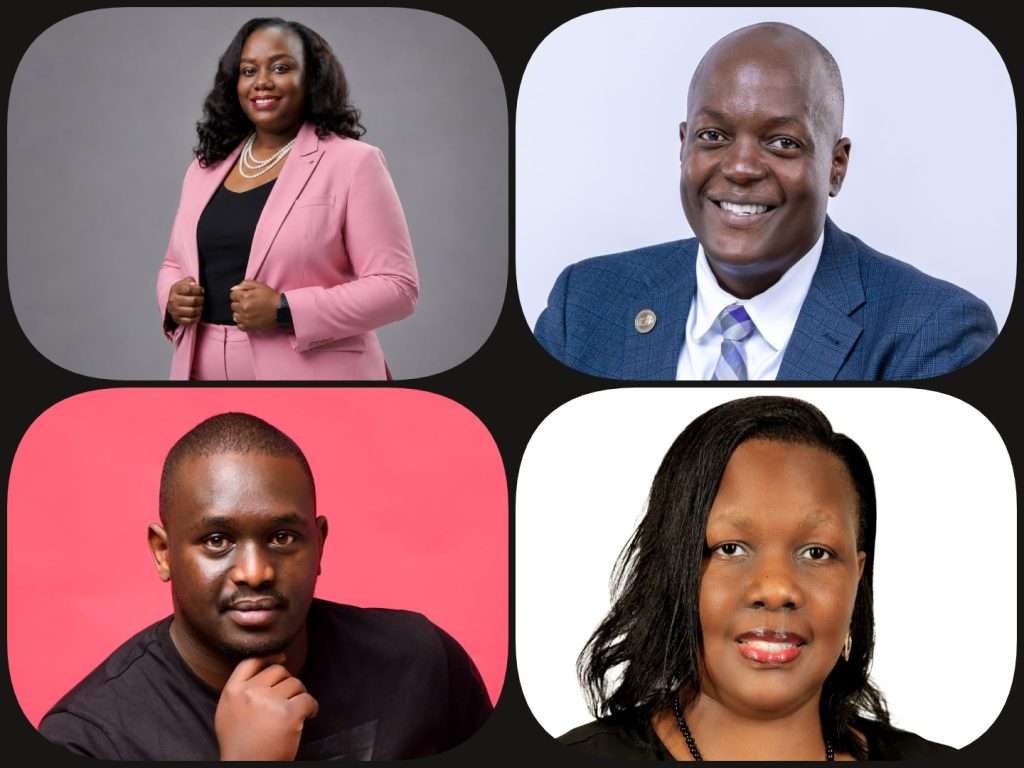
Four HR leaders, I&M Bank Tanzania's Erica Mboya, Fresh Del Monte's Gedion Kimutai, Prudential Uganda's Susan Kabedha and IDI's Paul Rumanda Rugambwa speak with openness about fathers, the cultures that silence them and why the seeds planted at home grow far beyond the family.
As the world marks Father’s Day, there is a particular kind of silence that sits inside many workplaces on the subject of fatherhood. Senior HR leaders across East Africa know this silence well and each of them has something to say about it.
Erica Mboya, head of HR at I&M Bank Tanzania, speaks about fatherhood from lived experience, drawing on the example set by her own father, whose unwavering commitment to family and community left a lasting impression. For her, that experience became a lens through which she reads leadership itself.
“Fathers are often the first mirrors through which children see their own potential. When a child grows up hearing ‘I believe in you’ from a father who means it and shows it, something is planted that no classroom or corporate training programme can replicate,” she says.
Gedion Kimutai, country human resources manager at Fresh Del Monte, frames the issue in terms of an organisation's moral responsibility. Many fathers, he argues, are navigating pressures that workplaces have been slow to acknowledge. The gap between what companies say and what they actually support is one he thinks HR must close deliberately and not incidentally.
“Many fathers find themselves navigating increasing pressures and expectations both at home and in the workplace. These challenges can sometimes leave them feeling stretched, uncertain or undervalued,” Gedion observes.
The culture that surrounds the policy
Susan Kabedha, chief human resources officer at Prudential Assurance Uganda, is precise about the structural levers. Inclusive policies alone, she argues, achieve little without the systems and management capabilities that make them real. What matters is building an environment where a father can raise a family challenge with his line manager and not have it held against him.
“Empower and upskill line managers to recognise and support their teams should they be facing a social challenge that needs them to take time off work or balance work and family,” Susan says.
Erica agrees that culture is the harder problem. She has watched fathers decline leave they were technically entitled to and she understands why. The pressure to appear committed runs deeper than any written policy can reach. For her, the fix has to start at the top of the room.
“When a senior leader says openly that they are leaving early for their child's school event, it gives permission to everyone below them to do the same. Policies create the framework and leaders create the culture,” she says.
Paul Rumanda Rugambwa, head of HR at the Infectious Diseases Institute, takes the argument a step further. He connects the dysfunction inside families to the failure of organisations to treat parenting as a shared responsibility. When workplaces position home and work as competing demands, he suggests, communities absorb the cost.
“A dysfunctional society is often the result of fathers being unable or unsupported in fulfilling their role at home. Organisations that build an effective work-family relationship, rather than treating the two as competing demands, help prevent that breakdown before it starts,” he says.
What presence actually means
Susan is direct about the legacy question. Fathers and father figures leave an impression whether they intend to or not, she argues, and the only real choice is whether that impression is a considered one.
“If you are a father, father figure or role model, always remember that people are watching and picking up a lot of what you say, do or portray. You want to leave a good legacy of having impacted people positively and so it is important to mind how you act and behave whether publicly or privately,” she says.
Paul closes with a thought that sits equally inside the home and inside the boardroom. The work of fatherhood, in his reading, is foundational rather than supplementary and it deserves the same seriousness that organisations give to any other strategic priority.
“Positive fatherhood is not a footnote to family life. It is foundational to it. Every father and father figure who shows up with patience, consistency and presence is quietly shaping the next generation's sense of right and wrong. That is a role worth honouring and worth supporting every day of the year,” he says.
Happy Father’s Day!